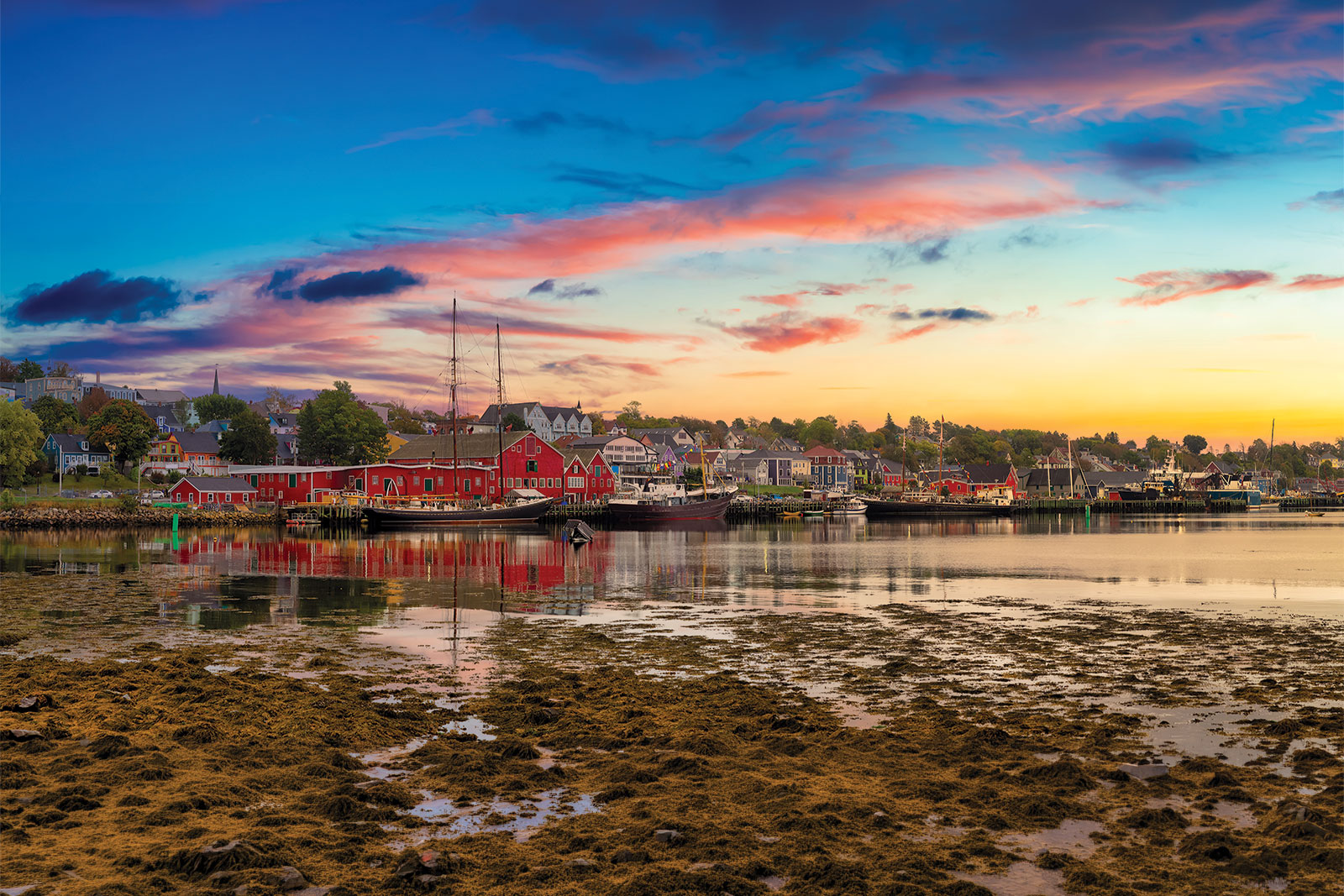
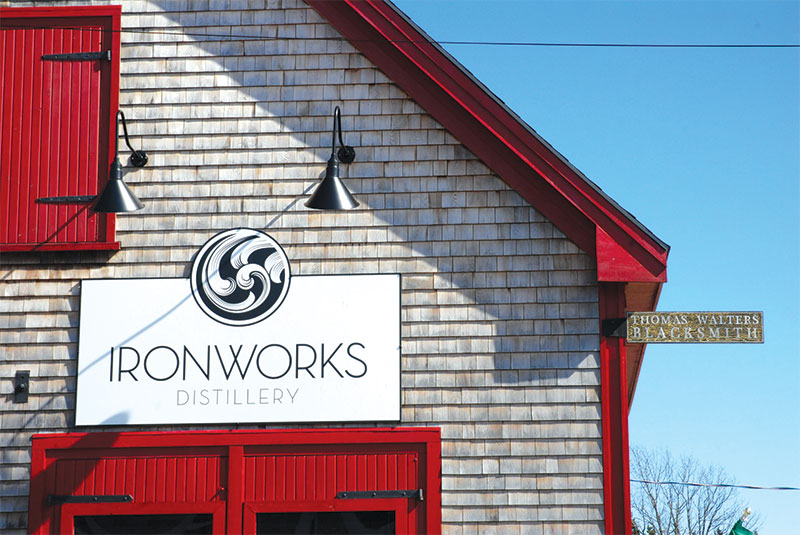
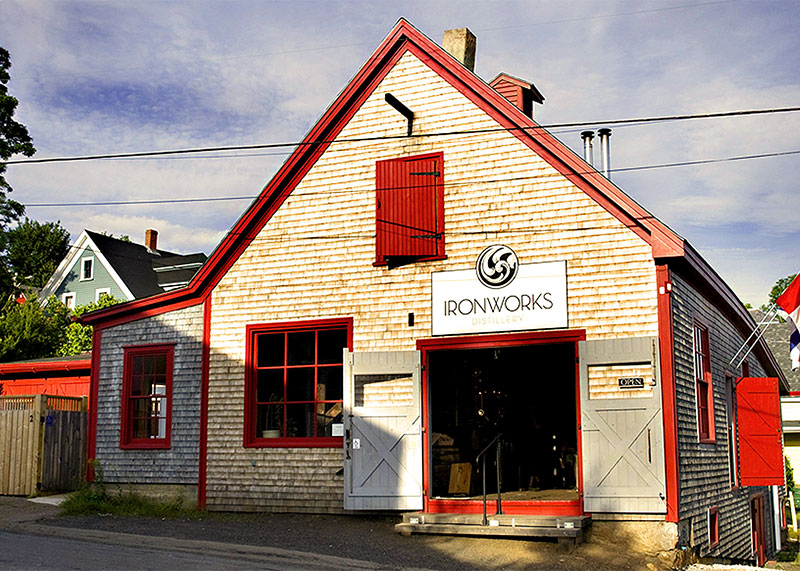
In 1893, Thomas Walters opened a blacksmith shop in Lunenberg, N.S. As a marine blacksmith, he focused on ironwork for the town’s booming maritime industry, fitting out the ships built and launched there. Over its lifetime, the shop produced hardware for both Bluenose schooners, crafting marine parts such as anchors, chains and gaffs. The blacksmith shop operated until 2004, spanning three generations and inspiring the name of Ironworks Distillery.
The founders, Pierre Guevremont and Lynne MacKay, had no experience in the distilling industry. One day, while thumbing through an in-flight magazine, they came across an article about micro-distilleries that caught their eye. Feeling inspired, they decided to open their own micro-distillery.
“That’s the classic story we like to tell during tours,” said Brad Deller, operations manager. “Since [then], they’ve passed the ownership of the distillery to Rebekkah Parsons, but they still drop in from time to time just to check on things and make sure we are doing a good job.”
Currently, the corporate structure of Ironworks also includes Matt Cyr, master distiller, Carly Weisner, sales manager and Leigan Stapleton, part of the production team. In addition, Ironworks has several seasonal shop and market staff during the summer months and at various farmers’ markets.
The engine room
Ironworks Distillery has two stills on site – Birgitta and Ruby. “Birgitta has a pot size of 210 litres – a kind of artisanal still, a hybrid between a pot and, to some extent, a column still,” said Deller. Birgitta is at the helm. She makes Ironworks’ rum, gin and brandy using a wood-fired pot, now quite rare in North America. “She was our original still, and she’s been running for over 16 years since before the shop was even open,” said Parsons.
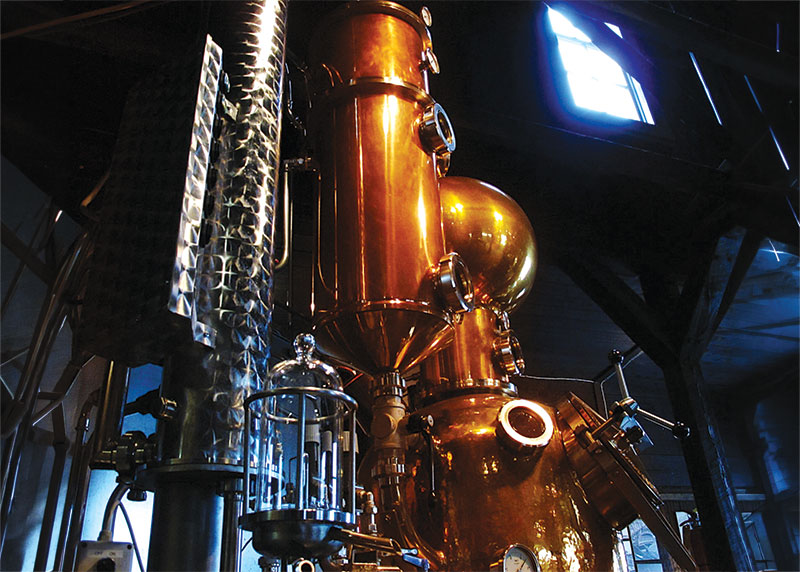
Additionally, Ironworks purchased a mash tun when they began whisky production in 2017. “We ferment on the grain, so we have our own little grain press; it’s our own sort of home-built contraption,” said Deller.
The grain press is set up with a small tote basket on top and a metal grate at the bottom. The production team pumps the fermented grain and wort into the basket, allowing the liquid to filter through. “It’s a very primitive process,” said Deller. “We literally need to go up on a step ladder with a shovel and squeeze as much of the liquid out of the grain as possible.”
Navigating the waters
When Ironworks began, a key part of the distillery’s philosophy was to source and work with local ingredient producers. “[Guevremont and MacKay] very much wanted to be environmentally conscious, but also as locally conscious as possible,” said Deller.
Using locally sourced ingredients has its challenges. Raspberries, blackberries and pears cannot be harvested year-round, and as Ironworks depends on local produce, if a growing season suffers, so does the distillery. But Parsons says the team is “happy to deal with it” because doing so keeps them true to their original philosophy. “Distilleries use a lot of resources; they use a lot of water. We wanted to come up with ways that would help mitigate that,” said Deller.
She was our original still, and she’s been running for over 16 years since before the shop was even open.
Rebekkah Parsons, Ironworks Distillery
One of their water management methods involves how they circulate water throughout the building. Ironworks implements multiple systems to reuse as much water as possible. The building uses minimal heating and cooling, relying largely on running the stills during colder months. Hot water from the stills’ condensers flows through pipes beneath the floors in several rooms. While the stills operate, this hot water helps heat some of the building’s spaces. In addition, they use the water for cooling throughout the building, and avoid plastic wherever possible, using paper-based products such as paper tape.
The spirit’s voyage
At Ironworks, everything begins with fermentation. They produce rum using molasses, vodka from apples, and apple and pear brandies from their respective fruits. The process then moves on to distillation.
Aging comes next and varies by product. Ironworks mainly uses two types of barrels: ex-bourbon barrels from Kentucky and Hungarian oak barrels from Europe. They also use ex-wine, tequila and sherry barrels to keep their experimentation alive. Aging ranges from six months for their gin to more than 10 years for their rums and whiskies. According to Deller, you cannot have a distillery in Nova Scotia without producing rum. “The rum running history is such a big part of things here,” he said.
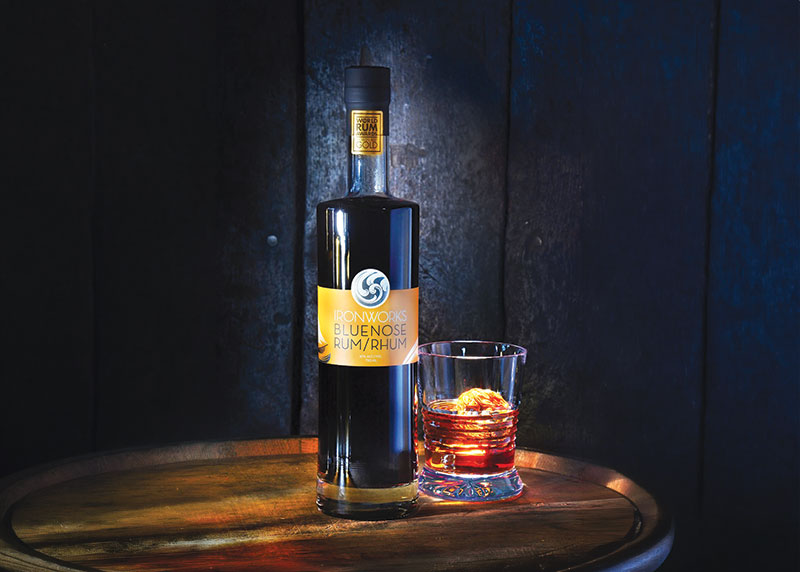
As a result, Ironworks offers a variety of rums, beginning with its flagship, the Bluenose Rum, a younger and more traditional dark rum. Their lineup also includes an Amber Rum, a Maple Rum, a Rum Boat Rum aged on their boat in Lunenburg and a small-batch harvest rum.
For their gins, Ironworks produces a London Dry-style gin, an aged gin and a Gin Noir made with local blackberries, while their Pear eau-de-vie is a classic unaged brandy crafted from local pears.
Drawing on the history of their building, their Blacksmith Whisky is a recent addition that stands out for its distinctive flavour, with hints of espresso and cocoa.
Almost every one of their products has won an award since they began submitting them in 2011. Parsons says she is most proud of winning the 2025 Product Innovation Award at the Canadian Artisan Spirit Competition for the distiller’s Around the World Whisky, a blend made from barrels lowered into the hold of the Barque Picton Castle before the ship sailed more than 30,000 nautical miles and visited 30 ports of call.
Charting the course
The team at Ironworks maintains a running list of new products or variations of current products they plan to release, including a new whisky variation and an entirely new product. They are also working to expand the on-site events they offer. “We have a lot of events here in the summer, but we’re trying to find ways to expand that into the winter,” said Deller.
“[We] get people in the door by showing off what we do and what we create,” said Parsons. “Using our event space is certainly a big goal for us, getting corporate events and private events and … supporting other local industries in that as well.”
Those interested in sipping Ironworks’ products at home can place orders online through their website, with shipping available across Canada (excluding Nunavut). Nova Scotians can find Ironworks’ products in liquor stores across the province, including Nova Scotia Liquor Corp. and private stores such as Bishop’s Cellar, Harvest Beer Wine Spirits and Liquid Assets at the Halifax Stanfield International Airport.