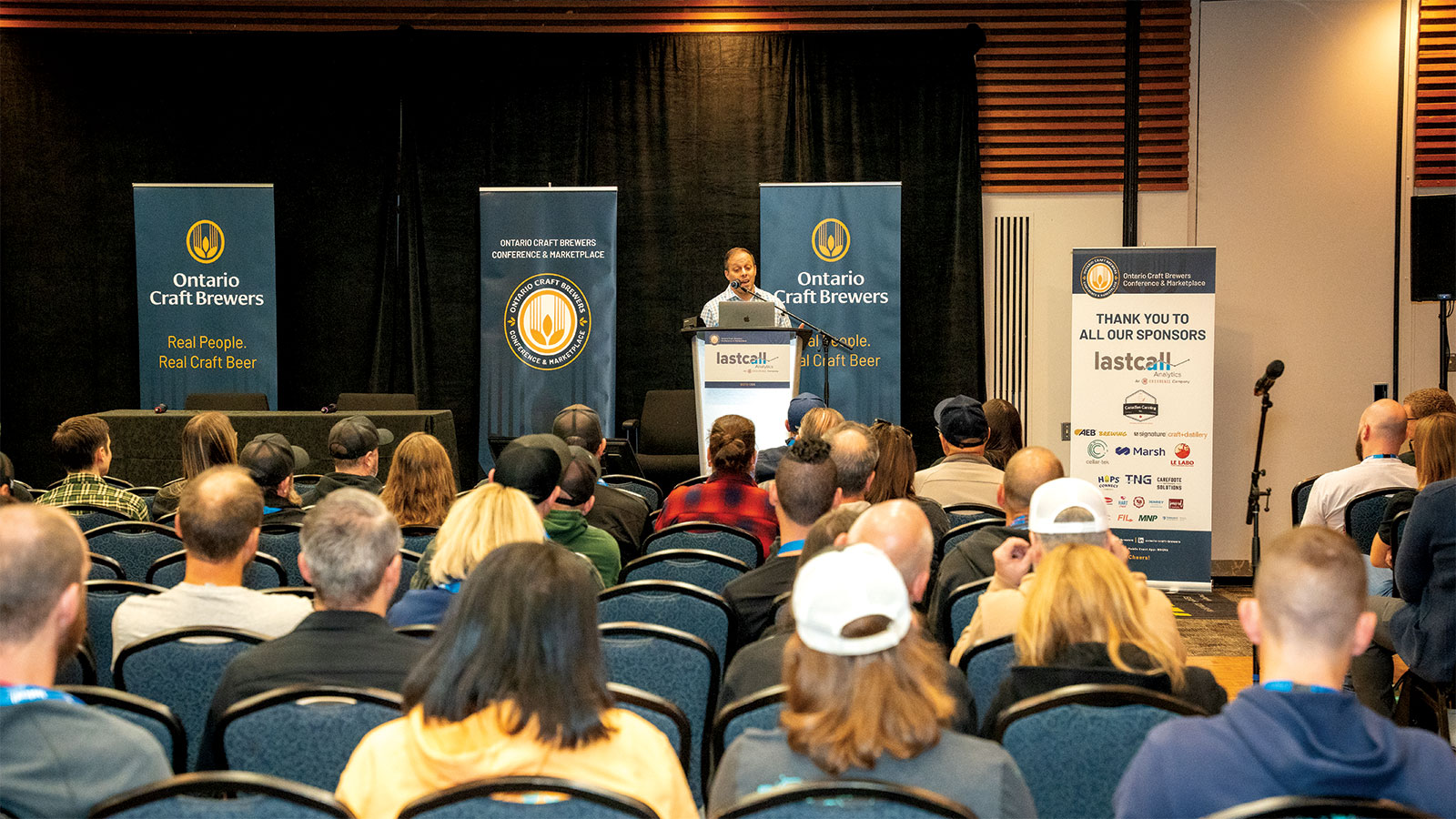
The Ontario Craft Brewers Conference (OCBC), which brings together the craft brewing industry’s top brewers, decision-makers, thought leaders, suppliers and supporters, returns to Hamilton, Ont., on Nov. 4 and 5 for two days of craft brewing education, networking, social events and business development.
This year, the conference theme is “Facing Our Future Together.” For an industry facing economic pressures, changing consumer habits and a rapidly evolving marketplace, the message is deliberate. “The craft beer world isn’t in that same kind of skyrocketing, everyone’s doing great, net-growth phase anymore,” said Jeff Talmey, chair of the OCBC education committee. “It seems like we’re all just putting our heads down and grinding through change after change.”
Those changes range from brewery closures and shifting consumer preferences to retail and distribution challenges that have forced breweries of every size to rethink how they do business. But rather than dwelling on uncertainty, this year’s conference aims to remind attendees of the collaborative spirit that helped build Ontario’s craft beer industry in the first place. “What made craft beer succeed was this notion that a rising tide lifts all boats,” said Talmey.
“We have to remember that we’re in this together.”
What’s new in 2026
That philosophy has shaped this year’s educational programming, with sessions designed to address the industry’s most pressing challenges. As in previous years, organizers have developed the conference agenda by combining attendee feedback, post-conference surveys and insights from an expanded education committee representing breweries of different sizes and specialties. The committee has grown to 10 members, comprising brewery owners, brewers, sales professionals, taproom staff and other industry leaders.
“We really wanted to diversify not only the size of the breweries these people work for, but also their roles within those breweries,” said Talmey. “We’ve cast the net pretty wide and have a really good idea of what people are looking for.” That diversity helps ensure the conference remains relevant whether attendees operate a small neighbourhood brewery or a large regional producer. “Other than scale, we all struggle with a lot of the same things,” Talmey said.
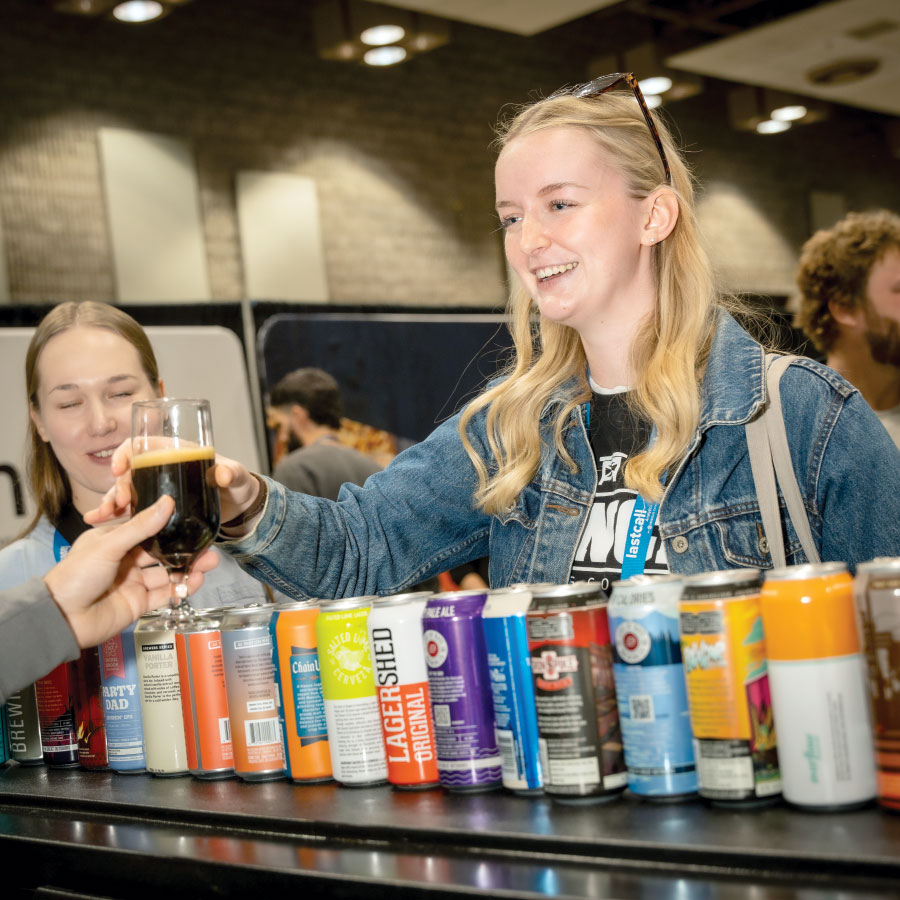
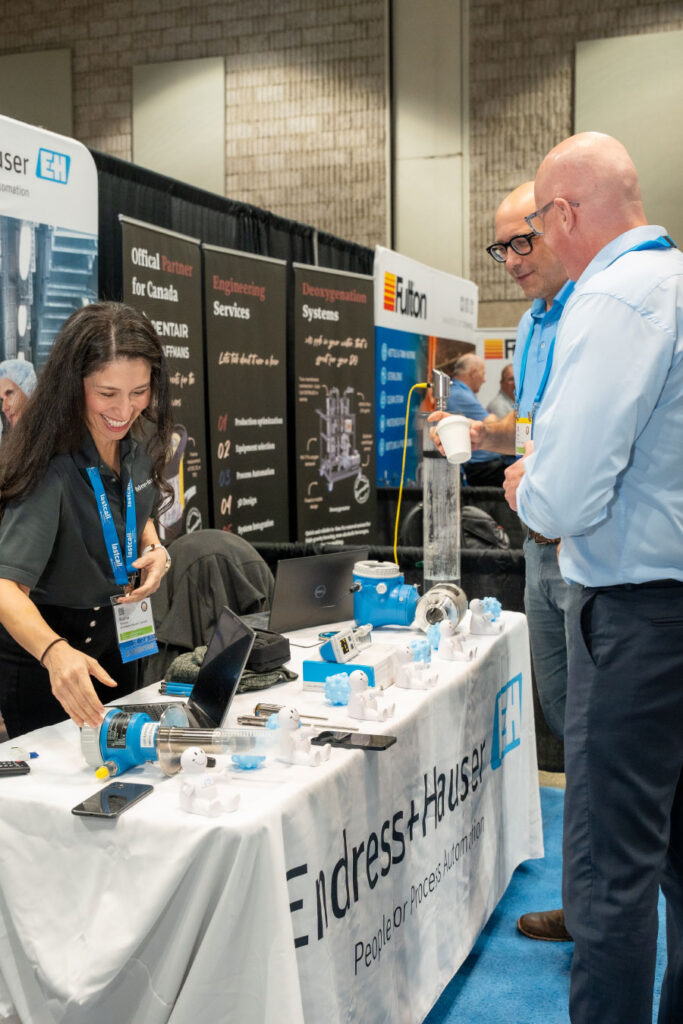
Among the biggest issues expected to dominate discussion this year is Ontario’s changing retail landscape. Recent changes affecting alcohol sales have required breweries across the province to adapt their business models, regardless of whether they sell through the Liquor Control Board of Ontario, grocery stores or their own retail channels.
“Advocacy is at the heart of OCB, which has been crucial given the changes and headwinds facing the sector these last six years,” said Scott Simmons, OCB president. “The conference and the Supplier’s Marketplace are the best places for the information sharing, networking and collaboration needed to navigate these massive changes.”
Talmey agrees that adapting to the new retail environment will be one of the conference’s most important topics of discussion. “It’s demanded a lot of time and attention from breweries of all shapes and sizes,” he said. Distribution also remains top of mind. “Making beer is not easy, but it’s a lot easier than getting it places,” Talmey said.
What made craft beer succeed was this notion that a rising tide lifts all boats. We have to remember that we’re in this together.
Jeff Talmey, Ontario Craft Brewers
Breweries are also increasingly focused on improving operational efficiency as rising costs continue to squeeze margins. “Five or 10 years ago, efficiency wasn’t something a lot of breweries were talking about,” said Talmey. “Now, it’s about asking, ‘How can we be more efficient as a business?’ If we can’t necessarily sell more beer next year, how do we survive selling the same amount?”
Those conversations extend beyond brewing operations to staffing, culture, customer experience and long-term business sustainability. “We’re always talking about making the best beer we possibly can,” he said. “But we’re also talking about treating our communities well, treating our employees well and becoming well-rounded businesses.”
Education for a changing industry
The conference will once again feature two keynote speakers – one from the beverage-alcohol industry and another who offers a broader perspective on leadership and professional development.
Award-winning journalist Dave Infante will deliver the industry’s keynote address. Known for his independent newsletter Fingers and his work with VinePair, Infante has become one of North America’s leading voices covering beverage alcohol and the business of beer. Complementing that perspective is former professional hockey player/coach, health care market strategist, public speaker and performance coach John Mark MacKenzie, whose keynote will focus on stress management, resilience and personal well-being.
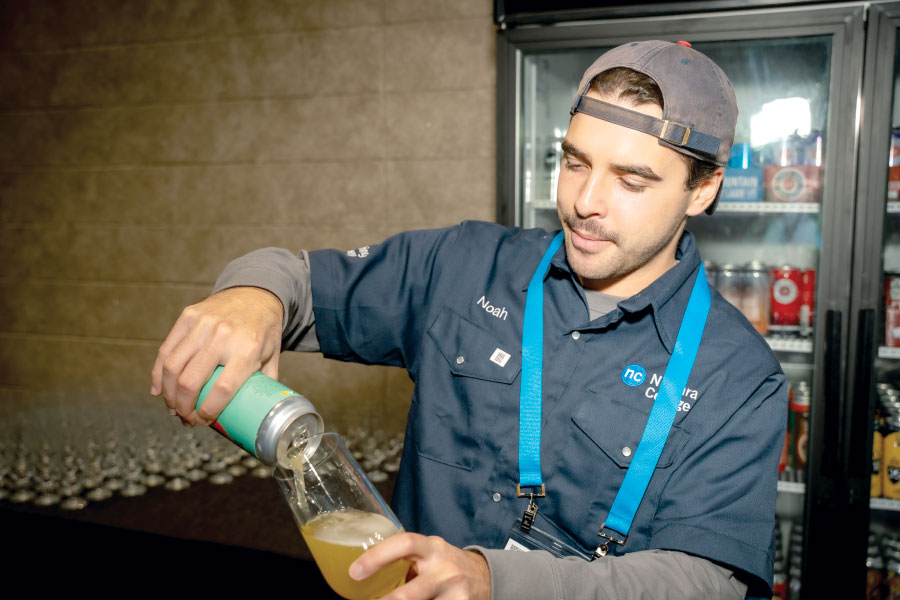
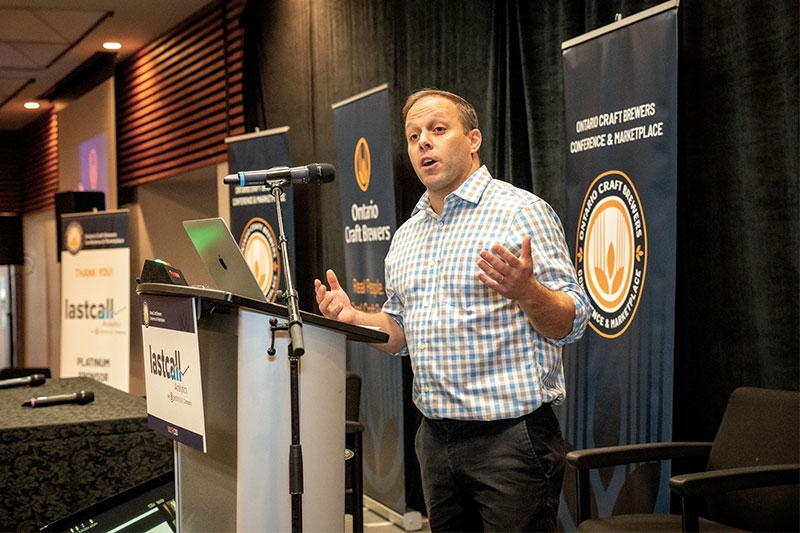
While those topics may seem outside the traditional brewing conversation, Talmey believes they couldn’t be more relevant. “I feel like everyone is reaching their bandwidth,” he said. With brewery owners and staff facing ongoing industry pressure, increased workloads and uncertainty, conversations about burnout and mental health have become increasingly important. “These aren’t just businesses. These are passionate entrepreneurs who put everything on the line to start breweries. When the tide starts to turn, we need to stick together and support one another,” Talmey said.
The conference’s People and Culture education stream reflects that reality by exploring topics related to workplace culture, employee development and leadership alongside technical brewing and business sessions.
Technical programming remains a cornerstone of the conference, with sessions covering brewing science, quality assurance and sales. Discussions on lager production are increasingly popular as the style becomes more prominent in craft brewing. AI will also return to the agenda, this year with a stronger emphasis on improving business operations rather than marketing alone. Instead of focusing on AI-generated content, organizers plan to explore how breweries can use emerging tools to better analyze business performance, automate routine tasks and make more informed decisions.
“As craft brewers who don’t have huge budgets, we have to make smarter decisions,” said Talmey. “There are people in our industry who are using AI very smartly.”
The value of networking
While the educational sessions remain central to the conference, Talmey believes the greatest value often comes between presentations. Whether conversations occur on the trade show floor, during evening social events or simply while waiting for the next seminar to begin, the opportunity to connect with peers remains one of the conference’s defining strengths.
“At the end of the day, you want to leave the conference with a couple of nuggets – something you’ve learned, or a conversation you’ve had,” said Talmey.
Those informal discussions often provide solutions to shared challenges while reinforcing that no brewery faces today’s struggles alone. “Surrounding yourself with people who do similar things and struggle with similar things is invaluable,” said Talmey. “If you participate – even if your participation is simply showing up – you’re going to gain from it.” For first-time attendees, his advice remains unchanged from previous years: introduce yourself, ask questions and embrace the opportunity to meet new people.
The future, together
Ontario’s craft brewing industry has weathered significant change over the past several years, and conference organizers recognize that many breweries continue to face difficult decisions. Yet Talmey remains optimistic about the future.
“I think there’s a ton of hope,” he said. “People aren’t just going to stop drinking beer. There are going to be successful breweries in Ontario for the next hundred years.” For him, the greatest takeaway from this year’s conference isn’t a single business strategy or technical innovation – it’s the reminder that collaboration remains one of the industry’s greatest strengths. “We want people to realize they’re not alone,” he said. “This whole industry started and thrived because of partnership, collaboration and a sense of ‘us.’ That still exists, and that’s what will get us through this tougher period.”
As Ontario’s brewing community gathers once again in Hamilton this November, the message behind “Facing Our Future Together” is clear: the industry’s greatest opportunities may come not only from the ideas shared on stage, but from the conversations, partnerships and sense of community that continue long after the conference ends.
Register for tickets at ontariocraftbrewers.com/conference. Interested in an exhibitor booth or sponsorship? Contact ocbc@ontariocraftbrewers.com.