
It’s not uncommon for Canadian beverage consumers to find that they enjoy beer crafted in Vancouver’s Gastown, but can’t locate it elsewhere in downtown Regina. Even someone who prefers Ontario-made gin needs to stock up on their local favourites if they’re visiting friends in Quebec or the Maritime provinces.
A patchwork market, not a national one
“Every province runs on its own system [of beverage trade], with different fees, tax structures, listing requirements and even different label regulations,” said Ontario’s Laneway Distillers founder and co-CEO Jessica Chester. “This fragmented approach creates significant cost and administrative burden for suppliers.”
For beverage producers, the challenges of getting their products to local markets, let alone out-of-province ones, are frustrating. “Depending on the province, the system can be prohibitive. In many cases, customers can simply choose to order directly from another province and ignore the provincial regulation. There is no free trade of beverage alcohol in Canada, and direct-to-consumer sales across provincial borders remain highly restricted on paper,” she said.
As producers of quality spirits, including several varieties of artisanal vodka and gin, Laneway Distillers is proud to source its ingredients from across Canada. However, Chester does not hold back in expressing her frustrations upon seeing Laneway on store shelves in other provinces. “The federal government did not include alcohol and food in its push for interprovincial free trade, once again costing billions in lost domestic trade and limiting opportunities for local producers,” Chester said.
New doors, same red tape
“When the gatekeepers at the grocery stores finally relaxed the rules, that was a real opening – that grocery channel,” said Chris Warwaruk. As co-founder, co-owner and now vice-president of sales at Farmery Estate Brewing in Neepawa, Man., Warwaruk has seen many changes in the trade and the associated barriers, both within Manitoba and beyond its borders, particularly in Ontario.
With a vast selection of alcoholic and non-alcoholic drinks in its portfolio, Warwaruk and Farmery Estate Brewery have always sought to expand into markets beyond its home base. “Looking at Ontario, we saw how the [Liquor Control Board of Ontario (LCBO)and its associated provincial liquor store retailers]’s Beer Store handcuffed themselves by limiting the sales of out-of-province products. This was before COVID-19, and we were the first craft brewery to enter the Ontario market.”
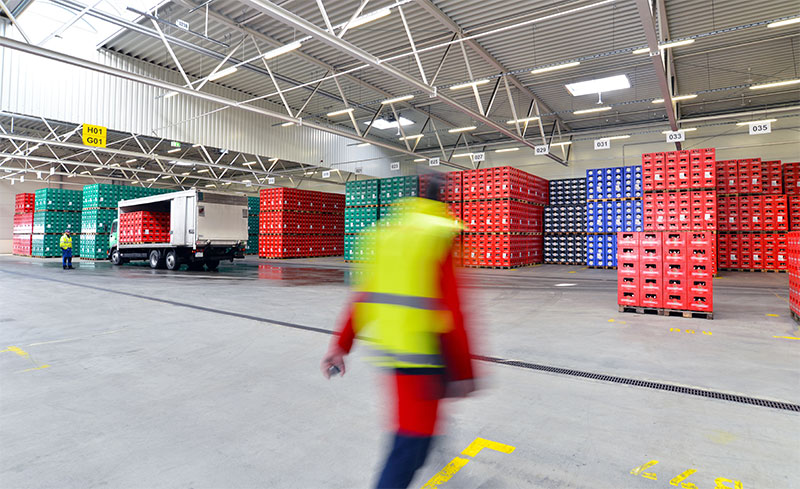
Many Ontarians and British Columbians recall the mid-2010s as the first time grocery stores were able to sell beer and wine on their shelves. Albertans saw their liquor sales move to a privatized model as early as 1993. While this brought some satisfaction to consumers in terms of new availability and accessibility, beverage producers were often confronted with new rules and regulations when moving their products into Ontario.
“If you are a smaller beverage producer in one province and have to deal with a tariff on your grain producer for the beverage itself going to another province, it will affect your decision and ability to send that product to the next province. That’s what we saw with Ontario. Saskatchewan had fewer barriers and was more of a wide-open market. These smaller rules and costs hurt provincial trade and Canada as a whole,” he said.
Warwaruk’s engagement with interprovincial regulation has given him a clear understanding of the Canadian beverage industry overall. He views it as a large economic system that has the potential to thrive more if the right opportunity arises. “It’s about easier trade. We are trying to stimulate the economy and give choices to those who like our products. Whenever you add … these interprovincial taxes and tariffs, there’s more added burden. Overall, if there was more governmental reception to interprovincial trade, there would be more trade,” he said.
The fine print of crossing provinces
Like Warwaruk, co-founder and brand director of The Craft Brand Company, Michael Laba, has kept a close eye on interprovincial barriers for the beverage trade.
While The Craft Brand Company began as an agency importing international craft beers into Ontario over a decade ago, Laba has handled many related trade issues through international product offerings and by adhering to regulatory requirements. It’s a balancing act that involves specifics, intricacies, fine print and a checklist of duties, right down to the product’s label.
It is costly and extremely slow to move product across Canada, whether by rail or truck, and each provincial liquor board operates under a different system. The lack of consistency and efficiency makes national distribution unnecessarily complex and burdensome for suppliers.
Jessica Chester, Laneway Distillers
“Any product coming in [to Ontario] needs to be label compliant,” he said. “For example, it requires English and French text, it must have an accurate ingredient or allergen list and it has to be registered and ordered by the LCBO.”
Laba emphasizes the importance of partnership in beverage logistics as a way to overcome some interprovincial trade challenges faced by Canadian beverage producers. “What we’ve seen is that [beverage producers] would also need a reliable and licensed freight partner,” Laba said. “A good freight partner with the right staff would be key to helping move your product across provinces, [getting] it in clients’ hands and [helping] you be competitively priced on the shelf.”
Beverage producers owe it to themselves to stay up to date on changes to provincial beverage regulations, new statutes and industry communications. Laba has been monitoring the regulatory changes occurring within the province that could have an impact. On April 1, the LCBO moved to a wholesale pricing model to streamline pricing for wholesale beverages. “… the hope is that it will create a competitive retail landscape without additional mark-ups to suppliers or consumers,” Laba said.
Where the lines should fall next
Some beverage producers take a firm stance on addressing Canada’s interprovincial trade barriers for their products. “Dismantle the regulations as soon as possible,” Warwaruk said. “Policy-makers need to support businesses, and if we get away from all the regulations, taxes and related obstacles, there will not only be more Canadian product options, but non-Canadian ones as well.”
Chester emphasizes the importance of easing regulatory financial burdens on smaller beverage producers and improving interprovincial liquor board relations. “It is costly and extremely slow to move product across Canada, whether by rail or truck, and each provincial liquor board operates under a different system. The lack of consistency and efficiency makes national distribution unnecessarily complex and burdensome for suppliers,” she said.
With so many localities producing prize-winning beverages, Laba says regulators and policy professionals should always keep fundamental practices and observations in mind. “Craft brewers are 10 per cent of the marketplace and employ 80 per cent of brewing jobs,” he said. “Any time a craft brewer can make more, there are more jobs and a better community economy. Reducing the barriers would be good for producers and communities all around.”