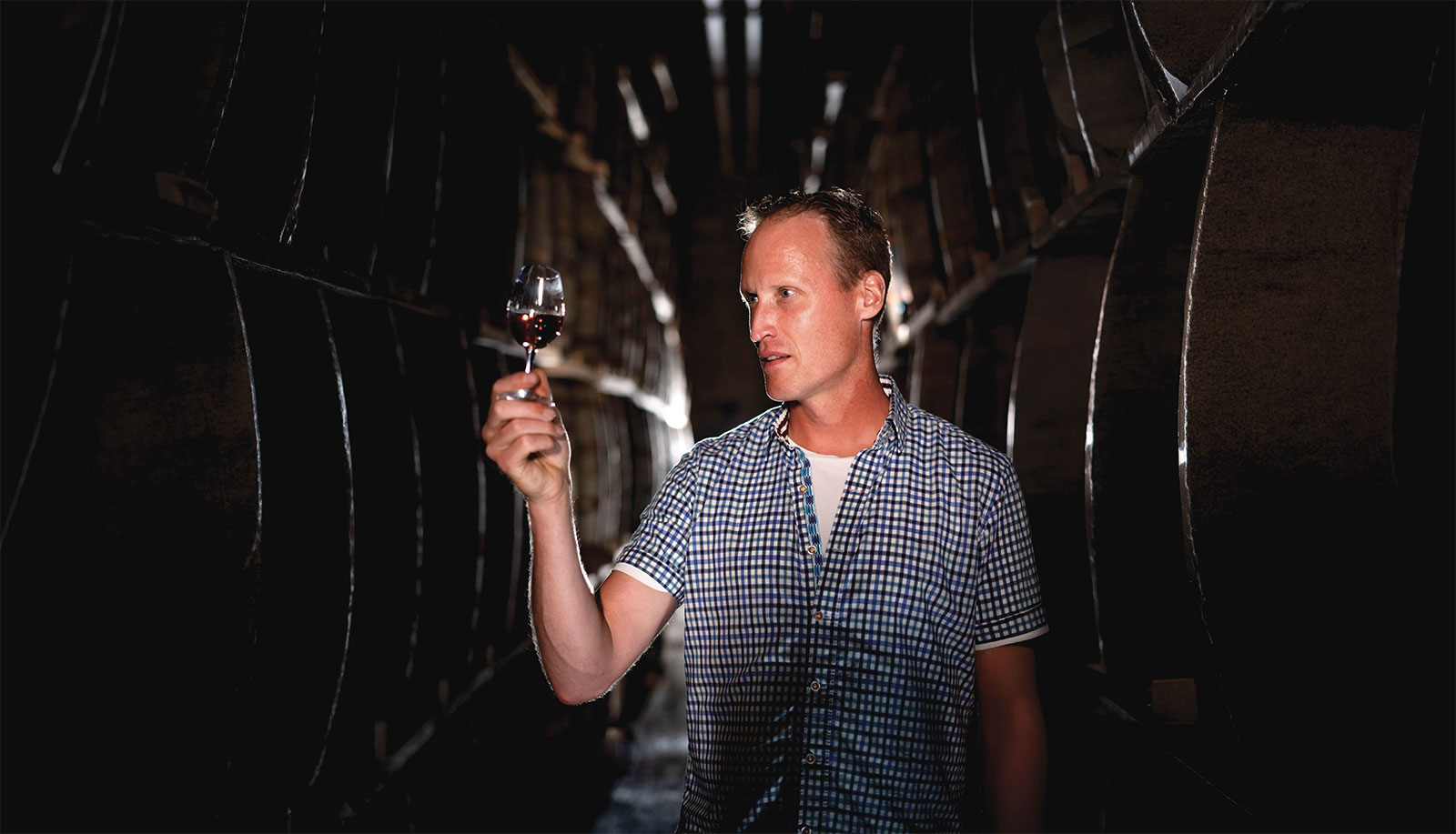
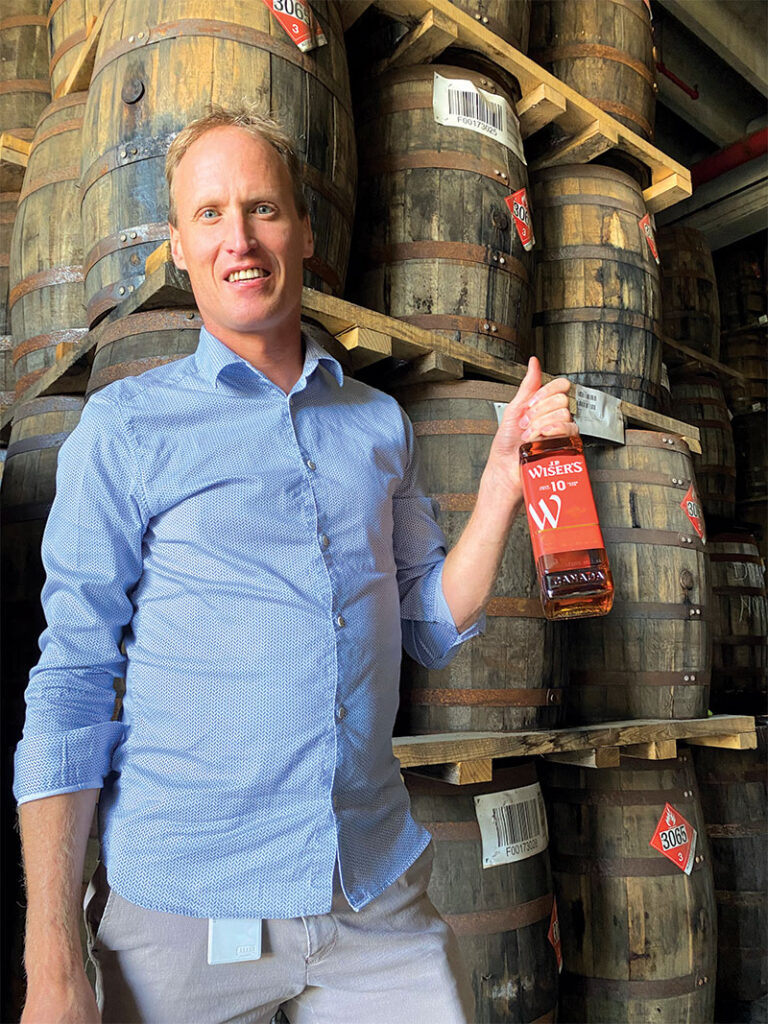
Thirty years into a career in whisky, Don Livermore, PhD, still talks more enthusiastically about fermentation data and distilling science than he does awards. That instinct says a great deal about the kind of master blender he has become.
For Livermore, the most meaningful accomplishments have never been the accolades, but the discoveries, innovations and unanswered questions behind them. Curiosity, for him, has never been separate from the job; it has been the thing driving it forward all along. That outlook is evident when Livermore reflects on significant moments of his career. He does not immediately point toward award-winning bottles or global recognition. Instead, he points toward infrared sensors.
“When I think about the defining moments of my career, my mind goes back to something that happened long before I became master blender at Hiram Walker,” Livermore said. “Around 1998, early in my career, I developed a technique using infrared sensors to analyze fermentation. It became a transformational innovation for the industry, and distilleries around the world still use variations of that technology today.”
That commitment to innovation as something capable of reshaping the industry would go on to be a driving force in the career that followed. Livermore would eventually become the master blender behind whiskies including J.P. Wiser’s, Lot 40 and Pike Creek, helping push Canadian whisky into more premium global conversations while earning multiple Canadian Whisky Master Blender of the Year honours along the way. Recently, he was named Master Distiller/Master Blender of the Year at the 2025 World Whiskies Awards in London, U.K. But for Livermore, the bigger achievement wasn’t necessarily attached to those bottles.
“I’ve crafted many, many whiskies and received many awards,” he said. “But changing how the industry works remains one of the accomplishments I’m most proud of.”
The science behind the spirit
Livermore joined Hiram Walker as a research scientist in 1996 after graduating from the University of Waterloo with a degree in microbiology, entering the industry at a moment when Canadian whisky was facing pressure.
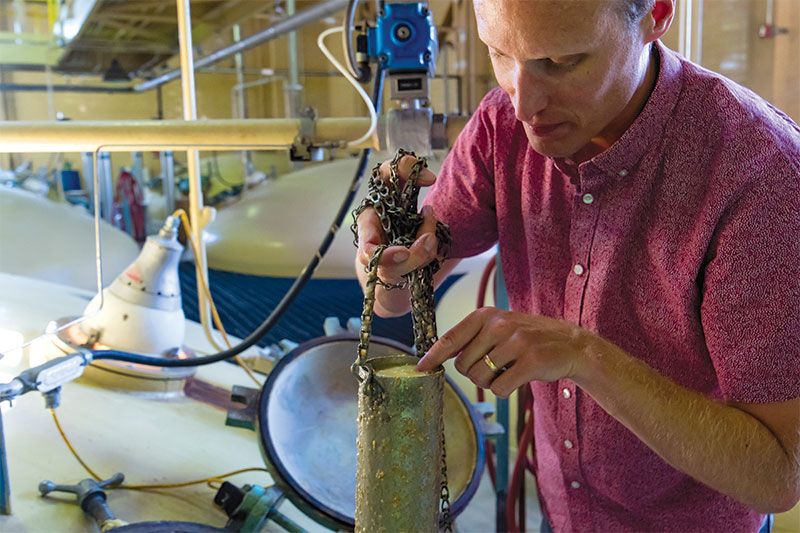
Vodka was booming, drinking habits were changing and many spirits companies were consolidating through mergers and acquisitions, but Livermore’s attention was already fixed elsewhere: fermentation science, data systems, and the mechanics underlying flavour development. That perspective led him to pioneer the use of NIR analysis for fermentation monitoring, work that transformed how distilleries analyze and optimize production.
“When you can create good data, you can then make good decisions. We moved the needle in terms of fermentation sciences,” said Livermore.
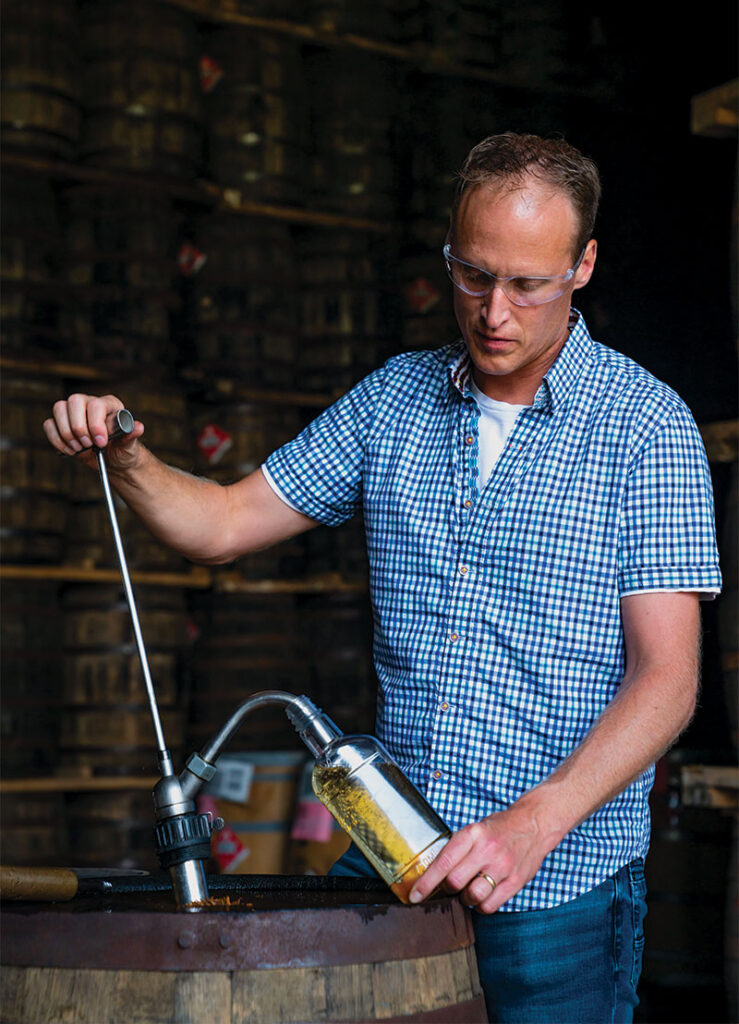
The impact stretched well beyond the laboratory. Better fermentation efficiency lowered costs, improved consistency and reduced carbon footprint through higher-gravity brewing systems that gradually increased alcohol yields from roughly eight per cent to 16 per cent. “Consumers don’t necessarily see the fermentation systems or the production changes happening behind the scenes, but they experience the results through better consistency, better quality and ultimately better value on their wallet,” said Livermore.
That balance between science and consumer experience runs through every part of Livermore’s thinking. He does not separate technical innovation from creativity. To him, they are inseparable disciplines: data enables creativity, curiosity fuels consistency and science protects quality while also creating room for experimentation. It’s also why he resists romanticized ideas about whisky making that reduce the role of a master blender to sensory instinct alone.
Livermore’s view of the job is considerably broader. In his mind, the blender isn’t an artist working in isolation, but a connector operating across every stage of production and business strategy simultaneously. “My job is a funnel,” he said. “I take in all of these different inputs – consumer behaviour, inventory, production realities, commercial pressures, opportunities across the business – and funnel that into the final whisky.”
Learning from the past, pouring the future
Livermore says history is essential to keeping Canadian whisky moving forward intelligently. His book, The Keeper of History, is part whisky history, part technical guide and part industry record. The book traces the evolution of Canadian whisky from the industrialization of the post-Prohibition era through to the modern distillery floor, while also unpacking the science, blending decisions and production systems that shape the category today.
“We need to preserve that knowledge, learn from our past successes and shortcomings, too, and pass that insight on to the next generation of whisky makers,” Livermore said. That philosophy shapes the way he thinks about experimentation as well. Failure is not exceptional; it is foundational.
Over the years, Livermore has experimented with grain hybrids, enzymes, yeast strains, distillation cuts, still modifications, exotic woods, barrel finishing, toasting and charring methods. Some ideas worked, some did not. But the point, he says, is that standing still is not an option. “The moment that [we do], another whisky category is going to pass us by,” he said. “We cannot stand still.” Relentless curiosity is especially important within his category because of its flexibility.
I’m not making whisky for me. I’m making it for you.
Don Livermore, Hiram Walker & Sons
Unlike American whisky regulations that subdivide categories through highly specific production requirements, Canadian whisky law remains comparatively open. Whisky must be made, distilled and aged in Canada in wooden barrels smaller than 700 litres for at least three years. Beyond that, producers are given enormous room to innovate. “Embrace that adaptability,” Livermore said. “It’s not just a regulatory advantage. That flexibility gives Canadian whisky producers creative freedom in how they distill, mature and blend whisky.”
Livermore compares Canadian whisky to paint mixing at your local hardware store. Bourbon, he explains, commits all its ingredients into one mash bill from the beginning. Canadian whisky, meanwhile, often treats grains separately – corn, rye, barley and wheat are distilled, aged and matured independently before blending. “You bring the white paint down, add your ink, shake it up and get your colour,” he said. “That’s Canadian whisky.”
The analogy also reveals how Livermore thinks as a blender. He doesn’t approach blending as a corrective or assembly step at the end of production. Rather, he sees it as architecture. Every grain, barrel and yeast strain is another variable within a larger system that can be adjusted to create different experiences. At the centre of that system sits the Canadian Whisky Flavour Wheel, the framework Livermore developed to map how flavour develops through grain, yeast and wood.
The wheel breaks Canadian whisky down into its three core flavour drivers, tracing tasting notes back to the production decisions that created them. Grain forms the foundation, with corn often contributing sweeter, lighter characteristics, while rye brings more spice and intensity. Yeast shapes the flavours developed during fermentation, producing everything from fruity esters to floral or earthy notes. Wood, meanwhile, influences the final layer through aging, barrel type, charring and maturation time.
The framework has become one of the clearest ways to understand how Livermore thinks about whisky: not as a single flavour outcome, but as a system of interconnected variables that can be adjusted, layered and rebalanced. “When I’m designing whisky, it always comes back to three spots: yeast, grain and wood,” he said.
Creating whiskies that resonate
Even after 30 years of designing whisky, Livermore still talks about the category with the enthusiasm of someone discovering it for the first time. For all his scientific depth, he repeatedly returns to one idea: whisky only matters if it resonates with people. “I’m not making whisky for me,” he said. “I’m making it for you.”
That isn’t just a sentiment. It’s something Livermore actively builds into the way he develops whisky. He regularly brings experimental whiskies to festivals and tasting events as informal research exercises, watching how people react to different flavour combinations and barrel treatments. “I call them Test and Learns,” he said. “Sometimes, I’ll put a whisky in front of people and realize, ‘Okay, this one isn’t resonating yet,’ or ‘Maybe it needs longer aging.’”
His blending seminars at the J.P. Wiser’s Brand Centre operate similarly. Consumers create their own blends, but Livermore treats the sessions as market research, too, observing which flavour profiles connect most strongly. “They get to participate in the process,” he said. “But for me, it’s also a way to understand what people are responding to and where flavour preferences are moving.”
Blending for the moment
For Livermore, the role of a master blender is shaped as much by understanding the moment surrounding a whisky as by understanding the whisky itself. Those inputs include economics, inventory availability, marketing strategy, drinking occasions, shifting consumer behaviours and global trends.
Livermore frames whisky eras almost like historical hands of cards dealt to different generations of blenders. Post-Prohibition blenders inherited scientific modernization. The 1960s and 70s were marked by explosive global growth. The 1990s demanded survival during category decline. His own era, he believes, became defined by experimentation, premiumization and adaptation during major cultural shifts, including the COVID-19 pandemic.
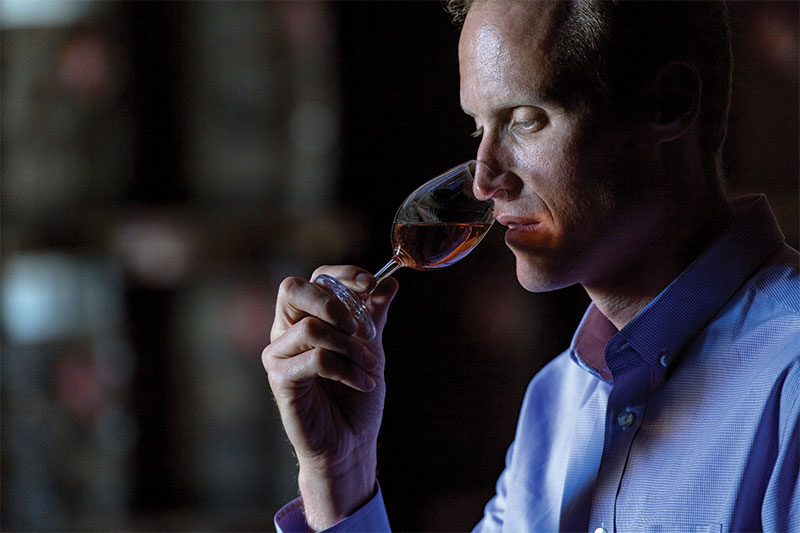
“The master blender is a reflection of what’s going on globally and culturally. They have to adapt to it,” he said. That adaptability has become especially important in today’s whisky consumption landscape, where consumers increasingly seek not only quality but also meaning and experience. Livermore believes people today are drinking less overall yet are far more intentional about what they choose and when they drink. “Making a truly excellent whisky,” he said, “is about designing meaningful experiences in life. Whether it’s a backyard barbecue, a birthday, an anniversary or a quiet moment with friends, my job is to make whiskies for those occasions.”
Few whiskies embody that idea more personally for Livermore than J.P. Wiser’s Dissertation, the limited release originally built from ideas connected to his PhD work on wood interaction. Released in 2016, only four years after he became master blender, the whisky unexpectedly won the World’s Best Blended Limited Release at the World Whiskies Awards. A decade later, consumers still ask about it.
Now, as Livermore marks 30 years in the industry, he is revisiting the concept with a new Master Blender’s Edition release that serves as a full-circle moment. “It’s been quite the ride,” he said. “Thirty years making whisky, and now I get to revisit something that was very personal to me from early in my career.” That anniversary arrives at an interesting moment for Canadian whisky. The category is more globally respected than it has been in years, as premiumization continues, experimental releases find audiences and consumers are increasingly interested in provenance, production and flavour education.
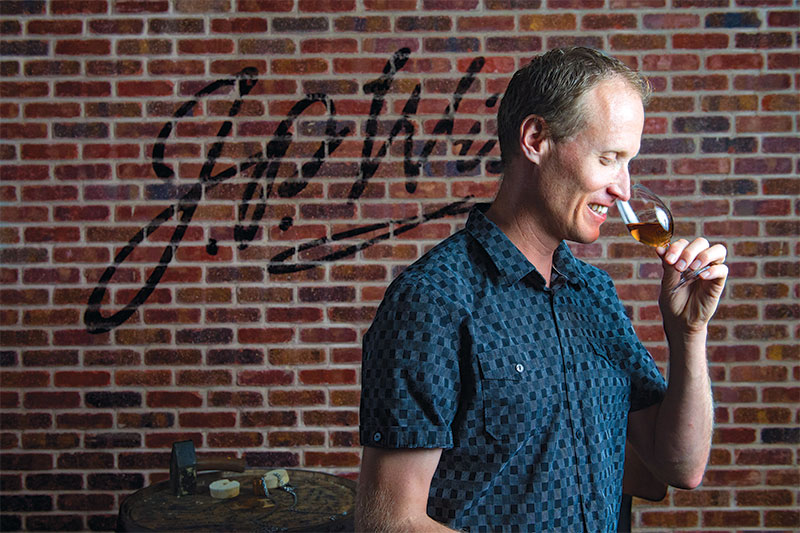
Trade pressures, tariffs and changing drinking habits continue to reshape the industry, but Livermore seems comfortable inside that uncertainty. In many ways, adaptability has become his defining lens not only for whisky but also for leadership.
For Livermore, preserving tradition is important, but he’s equally focused on protecting the conditions that allow Canadian whisky to keep evolving intelligently. “I live by the simple truth that I want to leave our whisky inventory in a better position than I found it,” he said.
A legacy of curiosity
Livermore’s story is still being written. But already, he has helped redefine what a master blender can look like: not simply a guardian of flavour consistency, but a translator between disciplines – someone capable of connecting microbiology to maturation chemistry, consumer behaviour to barrel strategy and historical preservation to future innovation.
Perhaps that’s why the infrared sensors still matter so much to him – not only because they changed production systems, but because they embody the philosophy that sits underneath everything he has done since: pay attention, understand deeply and stay curious.