Fate was hard at work in Kelowna back in 2016.
Daniel Plenzik and Jacques Tremblay, unbeknownst to each other, both arrived in Kelowna from Calgary to attend a week-long distilling seminar. At the seminar, they learned about regulations in the industry, science, marketing skills and more. They realized they were the only two participants from Calgary, and at one point, they were hanging out comparing notes and started tossing around the idea of a partnership.
Both Plenzik and Tremblay were engineers, with Plenzik being an electrical engineer and Tremblay being a geomatics engineer, but both were searching for a career change. Tremblay was planning to wait and look at an area outside of Calgary, but Plenzik was both eager and charming, and managed to convince Tremblay to start a distillery in Calgary and to take the leap earlier than he originally planned. Jump forward two years to 2018, they signed a lease and started the company.
They began renovations. In spring 2019, construction was completed, and production started in order to have products available for their public opening. With the strong support of their wives, they were able to take the plunge fully into the distillery, becoming not only the two main investors, but also the first two employees.
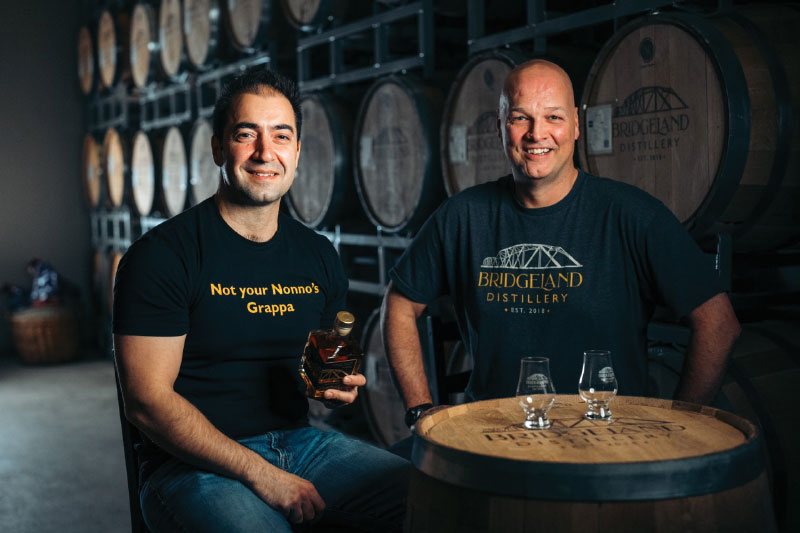
It was August of 2019 when Bridgeland Distillery opened its doors to the public in the historic Bridgeland-Riverside neighbourhood. Today, they have about 10 employees, including front of house, production, and sales and operations. “We are a bit of an oddity when it comes to a distillery,” said Tremblay. “We’re an urban distillery in the true sense that we’re a block away from the Bow River.”
Bridgeland itself has been a place of immigration representation over the last 100 years, and with that rich history in the area, many of the residents brought along their heritage alcohol. Bridgeland Distillery thought this made for an ideal location to open their distillery with a plan to pay homage to some of those very same heritage alcohols. With their core focus on true craft products coupled with their desire to take their own spin on traditional spirits to the forefront, Bridgeland Distillery joined a network called “Artisans at Work” to keep their artisanal focus strong.
“It includes a wide array of artisans, including stained glass and cheese,” said Tremblay. “So, when we tour and taste on the weekend with customers, they get to experience our artisan practice of distilling in a variety of ways.”
We are hoping to get to Gold in the World Whisky Awards coming next.
Jacques Tremblay, Bridgeland Distillery
Currently, the distillery operates from Wednesday to Sunday and is open on Mondays and Tuesdays exclusively for bottle sales. While they don’t have a restaurant operating within their space, they have forged partnerships with existing restaurants in the neighbourhood, so all the food served in their establishment is coming from one to two blocks away. These restaurants include Villa Firenze, Toto Pizza, Noto Gelato and Moonlight & Eli. When they were back in Kelowna comparing notes, both Tremblay and Plenzik knew they wanted to focus on aged spirits.
“Whether that [was to] be whisky or brandy, we went to look around for the best equipment to make these spirits,” said Tremblay. Instead of looking for equipment that could ‘do it all,’ they wanted to focus on the best equipment fit for their goals. This led them to source their pot still from Vendome Brass & Works in Newville, Ky. “It’s a 1000-litre pot still with a unique design … there’s a coiled lyne arm at the top, and basically that coil will provide an additional filter and more surface contact between the copper and the vapour at the distillation temperature.”
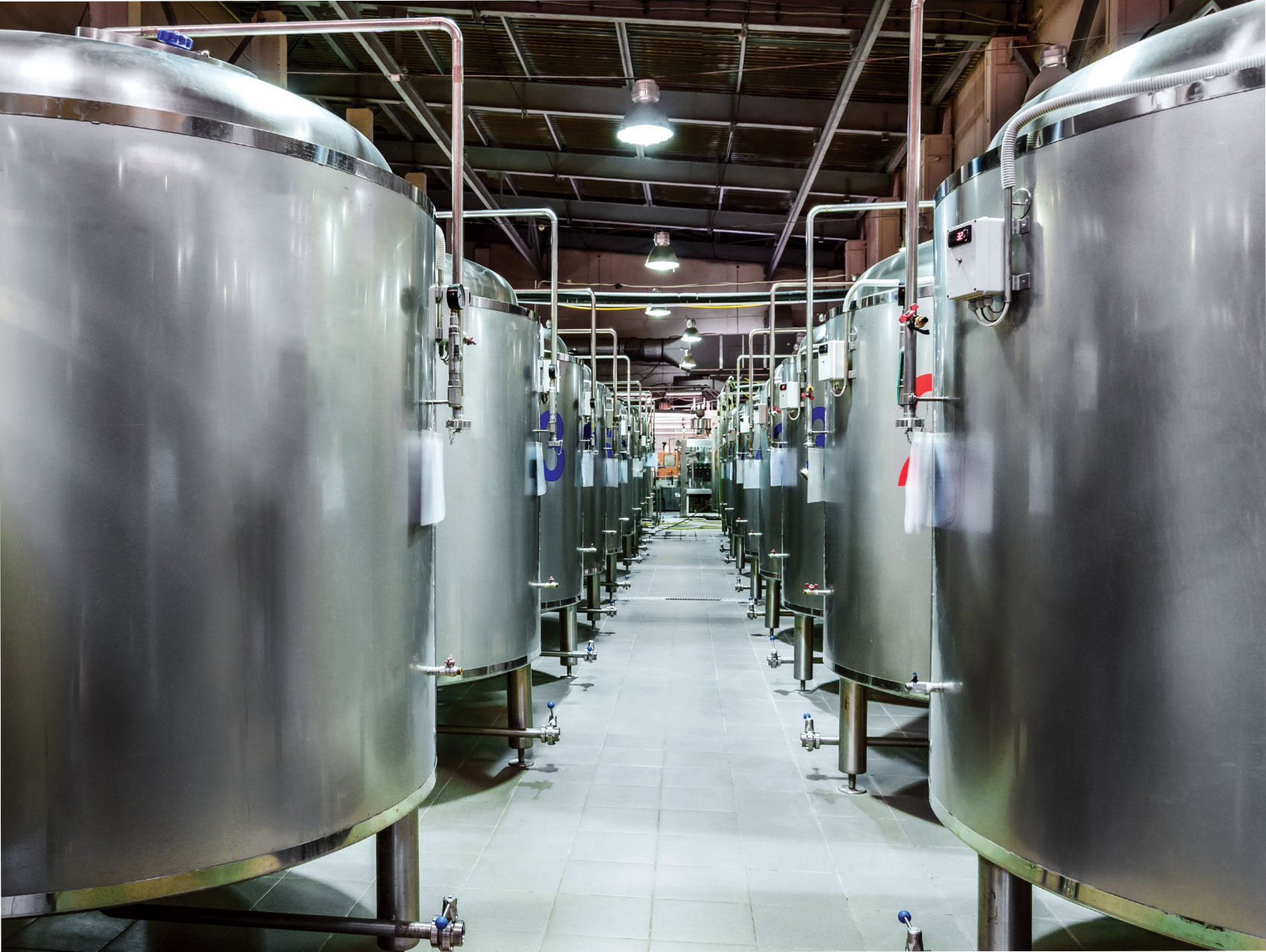
Bridgeland Distillery also has five fermenters and a mash tun on site. Their equipment allows them to produce around 20 stock keeping units, “which feels ridiculous sometimes as a start-up distillery,” said Tremblay. Bridgeland’s three main product lines are brandy, whisky and a grappa-like product called Eau De Vigne.
“We are not technically allowed to call it grappa, as that is protected for Italian production, but [Plenzik] is Italian and the grape-side is strong in him, so he really wanted to [make] a brandy and a grappa-style product. For me, whisky was the priority. When we started to weave our dreams together, we realized that there were a lot of commonalities between brandy and whisky-making. Most of the flavour for both productions comes from the aging process, so once it’s distilled, you put it in a barrel for a few years, and you actively try to manage the best barrel for each batch.”

Their product blend has the team at Bridgeland Distillery focusing on a well-orchestrated and planned schedule. They produce their Eau De Vigne and smaller seasonal subsets, including their Chamomile Honey Eau De Vigne in late December because it comes after the winemaking is done, allowing them access to the grape skins.
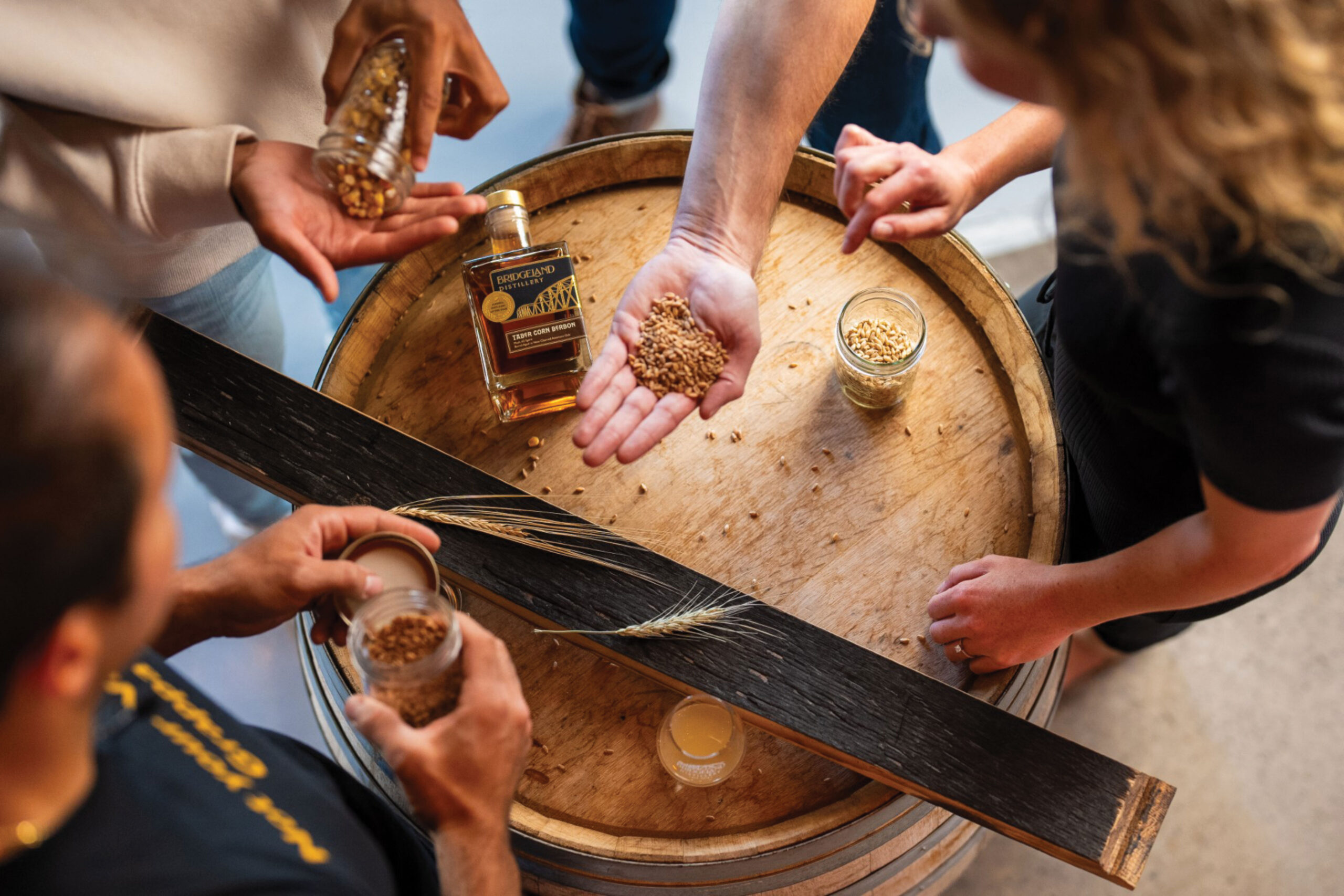
Their whisky season takes place from January to August. Using 100 per cent Alberta-grown grain, they make a single malt, Irish-style with oats and raw barley, and their Taber corn Berbon, working with a local farmer to secure their allotment of corn. The name “Berbon” comes from a blend of the name of the location of Taber and some witty charm to capture the spirit of bourbon in a truly Canadian spin on the spirit.
“One hundred per cent of our grain is from craft malt producers, and [carrying this certification] is something we are very happy about. We think there should be more craft distilleries getting certified. We get [our grain] straight from the farmers, and it’s good to have control of the input. We get our grain from two farms: the Molnar family in Taber and Hamill family in Penhold.”
Bridgeland’s last bit of production occurs from September to November, which is their brandy season. When they receive fresh grapes, the vineyards they partner with press them on-site and ship the juice to Bridgeland Distillery in a tote. From there, they produce their own wine as soon as it arrives at the distillery. Then, they ferment it and distill the brandy in November.
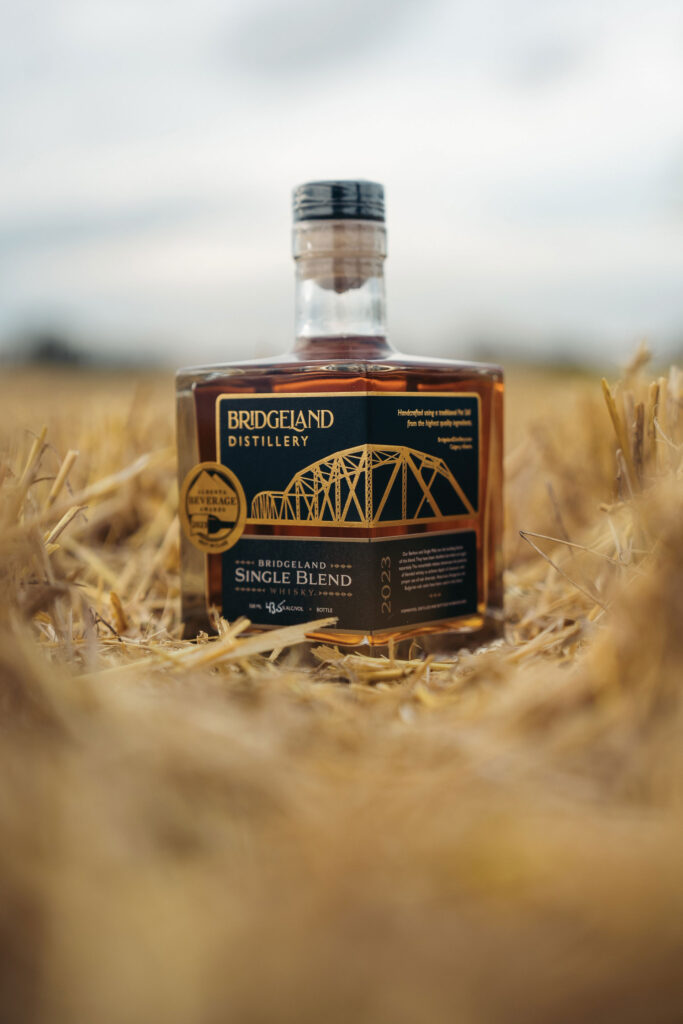
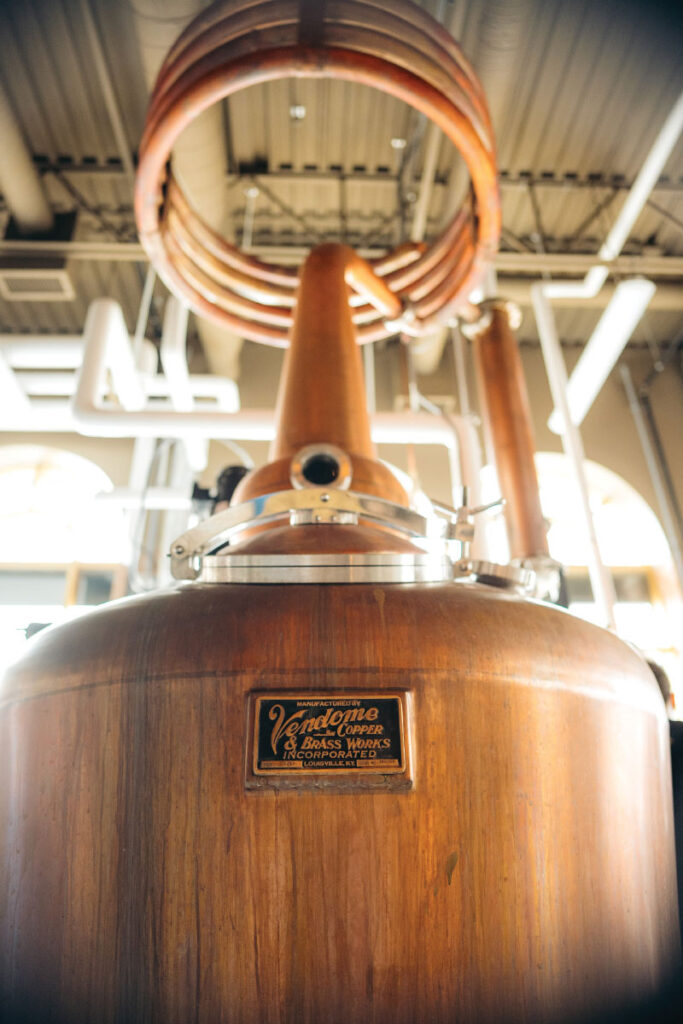
“We just finished up our brandy season for 2025,” said Tremblay. “It is a very seasonal process. That’s why we decided to put our plans together, because winter and spring will be long until the next harvest, and we are using the same type of equipment anyway.”
Bridgeland’s craft is not without recognition. In 2023, they won the Best Brandy in the World award at the World Brandy Awards in London for their Moscato Brandy in the two to three-year category. Most recently, their Glenbow Single Malt Port Finish won Best Barrel Finish Whisky at the Canadian Whisky Awards in January 2025. They’ve also received Gold and Double Gold at the Canadian Whisky Awards, the Canadian Artisan Spirits Competition and the World Whisky Awards.
“We are hoping to get to Gold in the World Whisky Awards coming next. So far, we have achieved Silver,” said Tremblay.
Bridgeland Distillery’s craft products can be found on shelves at the distillery in Calgary. Additionally, they are available in 180 liquor stores and on shelves at more than 40 bars across Alberta. Their Berbon has also sparked enough of a demand in Saskatchewan that it is being carried in 20 to 25 liquor stores between Prince Albert, Saskatoon and Regina. Be sure to keep watch on Bridgeland Distillery in 2026, they are working on breaking into new markets, setting sights on Ontario or British Columbia.
Additionally, they are working on a trade mission to Japan. Bridgeland Distillery will be part of the food expo in Tokyo at the beginning of March. They will be one of six Alberta-based vendors in attendance. “It’s going to be a lot of work to be ready for the Japanese market, but we are looking forward to it,” said Tremblay.