GO Logistics is a 20-year-old Canadian final-mile delivery provider specialized in compliant and secure home alcohol delivery.
With licensed and certified drivers, the Ontario-based business helps breweries, wineries and distilleries move products safely from the warehouse to the customer’s door. Its advanced tracking and routing technology support same-day and next-day delivery options, while maintaining strict adherence to alcohol-transport regulations. GO Logistics is particularly valuable for producers offering direct-to-consumer programs, holiday gifting or premium shipments that require reliability, discretion and quality control.
“Over the past five years, we have been licensed by the Alcohol and Gaming Commission of Ontario (AGCO) to provide end-to-end last-mile alcohol delivery for wineries, breweries and distilleries to retailers including restaurants, hotels, events and e-commerce customers,” said Mark Hoang, GO Logistics marketing director.
The company’s scope of offerings includes same-day and next-day home delivery, age verification and compliance at the door, secure handling and transport, customer notifications and delivery tracking, and scheduled and on-demand delivery windows.
Challenges and regulations
Same-day delivery is particularly difficult to scale in Ontario due to the province’s geography, traffic density and regulatory environment, which creates natural challenges such as:
- Large delivery radiuses with inconsistent population density
- AGCO restrictions requiring in-person service
- High labour costs for on-demand fleets
- Unpredictable order volumes that make route optimization difficult
“Traffic congestion in major centres such as the Greater Toronto Area and Ottawa also causes significant variability in delivery times,” he said. “Same-day delivery requires a dedicated fleet capacity, dynamic routing and close co-ordination with manufacturers, distributors and retailers that only experienced carriers can support sustainably.” What makes final-mile delivery for alcohol uniquely challenging compared to other e-commerce categories, is that “alcohol is one of the few categories where compliance, safety and customer service intersect at the doorstep,” said Hoang.
On top of that, other key requirements include:
- Mandatory age verification: Every delivery requires in-person ID checks, adding time and labour
- Cannot leave unattended: No safe drop, which increases re-delivery attempts
- Product sensitivity: Glass bottles, temperature exposure and secure transport requirements
- Route inefficiency compared to parcels because deliveries must be timed when customers are home
Alcohol delivery is a high-touch service, which is why operational discipline matters so much.
Mark Hoang, GO Logistics
“Alcohol delivery is not just standard logistics,” he said. “It’s a specialized-goods service that requires trained drivers and tight standing operating procedures. Regulatory factors also affect how and where we can deliver, with the most significant regulatory factor being that alcohol delivery is governed provincially, not federally.”
In Ontario, all delivery providers must comply with AGCO, which includes:
- Alcohol cannot be delivered across provincial borders under AGCO licensing
- Customers must be at least 19 years old and present government-issued identification
- Alcohol must be handed directly to the verified recipient
- Delivery-hour rules and municipal restrictions influence when deliveries can legally be completed
- Record-keeping and compliance reporting, including proof-of-delivery and age verification logs
“These regulations influence how we structure routes, train our drivers, schedule deliveries and communicate with customers,” said Hoang. “In addition, many producers often misunderstand the cost and complexity of alcohol delivery as they compare alcohol to standard parcel shipping, but it operates more like a specialized service.”
Misunderstandings often include:
- Underestimating the labour time per stop, since drivers must reach the buyer, confirm identity and complete the ID verification process
- Assuming safe-drop or leaving at concierge is allowed
- Not realizing the cost impact of failed delivery attempts
- Expecting parcel-style density in routes (alcohol routes are naturally less dense)
- Underestimating the resources spent on training, insurance and compliance costs built into alcohol delivery
“Alcohol delivery costs reflect time, risk, regulation and controlled handling, not just distance,” he said. The major cost drivers of operational factors that affect the bulk of delivery costs include:
- Labour (driver wages, training for compliance, onboarding)
- Routing and dispatching (alcohol requires tighter, less efficient routing)
- Re-delivery attempts when customers aren’t home
- Fuel and vehicle costs, especially for same-day windows
- Insurance and liability for controlled goods
- TMS technology for route optimization, tracking, customer notifications and proof-of-delivery
Warehousing and operational handling such as, receiving, secure storage, inventory controls and temperature-sensitive staging for alcohol - Sorting and staging accuracy to maintain compliance and reduce delivery errors
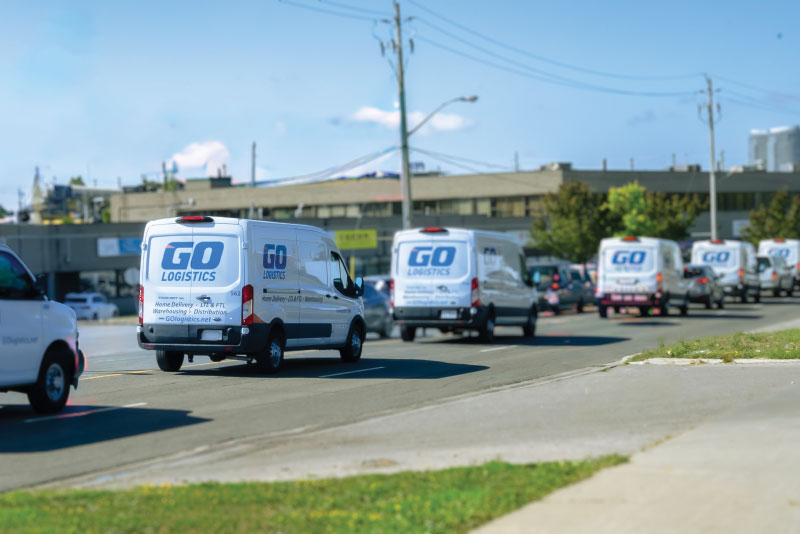
“Alcohol delivery is a high-touch service, which is why operational discipline matters so much,” said Hoang. Since 2020, Hoang says customer expectations around alcohol delivery have changed. “Customers have shifted from ‘this is a nice-to-have’ to expecting alcohol delivery as a standard service,” he said.
Key changes include:
- Expectation of faster delivery windows (same-day or next-day)
- Demand for real-time tracking and text/phone updates
- Preference for predictable time windows, not all-day waiting
- Higher importance on professionalism and trust at the door
- Greater willingness to buy alcohol online for gifts, events, holidays and bulk orders
- Customers now treat alcohol delivery with the same expectations as food delivery: fast, informed and convenient
As for what level of delivery speed, tracking and convenience customers expect in 2026, he says customers will expect full visibility and control, not just delivery. “The industry is moving toward two- to four-hour delivery windows as a standard, live GPS tracking, driver ETA updates and two-way communication, flexible scheduling options – evening and weekend windows, full transparency from checkout to the doorstep and fewer failed attempts through proactive notifications,” Hoang said.
With this in mind, the company has big plans for the next three to five years. “GO Logistics is focused on scaling, technology and service depth. Our road map includes expanding final-mile home delivery capabilities across Canada, growing our alcohol delivery network, partnering with more producers and retailers,” Hoang said.
The company is also focusing on:
- Developing advanced AI route optimization, tracking technologies and customer-facing transparency tools
- Enhancing its warehousing and distribution footprint to support national brands
- Developing industry-specific delivery programs (keg delivery and returns, equipment delivery, marketing materials and displays for events)
- Strengthening its cross-Canada partnerships to offer fully integrated national coverage
- Supporting retailers with scalable, reliable last-mile solutions during peak seasons and promotional cycles
“Our goal is simple,” he said. “Become the most trusted end-to-end delivery partner for wineries, breweries and distilleries for retailers across Canada, with a focus on reliability, compliance and customer experience.”