While Canadians are used to paying taxes for goods and services, they might be surprised to learn that over 50 per cent of the sticker price on a bottle of alcohol comes from government taxes.
Understanding Canada’s alcohol taxation system is complex, as it involves multiple layers of taxation from the federal excise duty, which is levied at the point of production or import and becomes part of the wholesale cost of a product. Then there is the provincial markup rate, which varies widely from province to province.
On top of these taxes are the buyer’s sales taxes. Products with higher alcohol percentages, such as spirits and refreshment beverages, are generally taxed at a higher rate than products with lower alcohol percentages, such as beer and wine.
Both Alberta and Saskatchewan have moved to fully privatize their liquor stores, whereas other provinces still maintain government-controlled liquor stores. These government monopolies charge higher markup rates, resulting in higher retail prices for consumers. Canada’s heavy tax system and bureaucratic hurdles have pushed many alcohol brands to the brink of survival; some have introduced lower-alcohol options, while others have adapted by selling outside of the country.
Stifling craft industry growth
In British Columbia, 2025 saw 20 breweries close due to softening demand, rising costs and over-taxation. Ken Malenstyn, one of the owners of Barnside Brewing in Ladner, B.C., says the provincial markup rates are the cause of “killing B.C. craft breweries.” Malenstyn says that if the markup model were fair, craft breweries would be able to pay their employees and invest in growing their businesses by expanding distribution and setting more competitive prices. “All these things would help make craft breweries more sustainable, and to continue generating revenue for the government and hiring more employees,” said Malenstyn.
Canada’s heavy tax system and bureaucratic hurdles have pushed many alcohol brands to the brink of survival; some have introduced lower-alcohol options, while others have adapted by selling outside of the country.
Even long-established breweries, such as Lighthouse Brewing, which operated for 27 years, have had to close permanently. “There’s something wrong when that’s happening. So, it’s not just the small guys … there’s just a lot of good operators that aren’t able to survive because they’re constantly having to put their own money back in the brewery to keep it going,” said Malenstyn.
In summer 2025, the BC Craft Brewers Guild pitched reforms, titled Protect BC Craft Beer, to reduce the tax burden on small, local producers. “For most small breweries, we’re paying 40 cents a litre for every litre we produce before we sell anything, and that’s just for the right to be in the industry,” Malenstyn said. “And for a lot of us, it could be 10 per cent of our revenue.” The Guild told Victoria News that these reforms would be revenue-neutral for the government and help save B.C. craft breweries approximately $16.3 million annually.
Classification disputes
A few years prior to launching Edna’s Non-Alcoholic Cocktails, Nick Devine envisioned a brand of alcoholic beer-based cocktails. Devine had 20 pallets worth of these canned beer cocktails manufactured by a local Vancouver brewery. At the time, the British Columbia Liquor Distribution Board (BCLDB) disagreed with Devine’s classification of the product as a beer. Beer markups are based on production volume, and for small producers producing 15,000 hectolitres or less, the markup would be 40 cents per litre. The BCLDB wanted to classify Devine’s product as a refreshment beverage, which would have significantly increased the markup rate to 73 per cent per litre.
The dispute dragged on for months before Devine was permitted to sell the inventory he had already produced. By then, the project had become a financial loss for Devine and left him feeling demoralized. Armed with the lessons he had learned from his beer-based cocktail venture, Devine later left the alcohol space and went on to launch a successful line of non-alcoholic cocktails. His experience with the BCLDB underscores how challenging it can be for new, unconventional products to navigate a system built around the long-established product classifications of the liquor distribution board.
Evolving into the low alcohol market
Olivia Lovenmark-Hay launched Duchess Cocktails in 2020 with a 12 per cent ABV bottled cosmopolitan. “With tax being 55 per cent of our shelf price, it is a significant aspect when it comes to pricing. It really makes creating a premium product or a higher quality product much more challenging because the cost of what you are selling goes up so significantly,” said Lovenmark-Hay. She is now preparing to launch a low alcohol line of canned ready-to-drink spritzes.
It really makes creating a premium product or a higher quality product much more challenging because the cost of what you are selling goes up so significantly.
Olivia Lovenmark-Hay, Duchess Cocktails
Lovenmark-Hay says that her 12 per cent ABV cocktails were “much better to sip at home … but by offering something that’s lower ABV at five per cent, [we’re] really expanding the use cases and the people who are more interested in [our] product.”
Another benefit of producing a series of lower per cent ABV drinks is the considerably lower federal excise duty. As of April 1, 2026, spirits containing not more than seven per cent absolute ethyl ABV have an excise duty of $0.358 per litre, whereas spirits containing more than seven per cent absolute ABV are $14.117 per litre. Duchess Cocktails will be able to offer their spritzes at a more cost-friendly price point for potential customers. The stark difference in excise duty rates for products below and above seven per cent ABV also underpins how these arbitrary rules dictate the types of products presented to customers in stores.
Diversifying into other markets
Nathan Flim, founder of The Fort Distillery in Alberta, has expanded his business into several U.S. states and Taiwan. Remarkably, Flim found it more difficult to get his products into other Canadian provinces’ government-run liquor stores than into the U.S. For Film, the extensive paperwork and application process for each liquor distribution board was challenging, and the small market size in some provinces made the hassle of applying not worth it. He made more revenue selling his products in the U.S. than selling to provinces such as B.C. or Ontario, where alcohol taxation is heaviest.
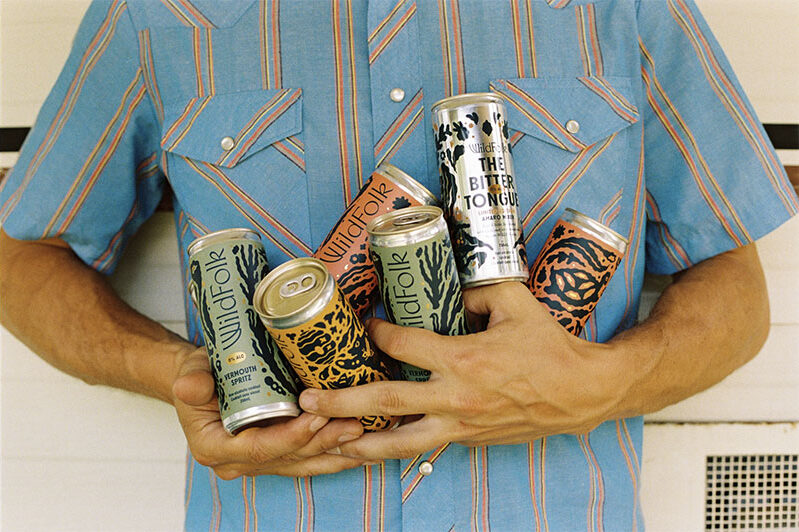
Dalia Kohen, the founder of Wildfolk, a brand of non-alcoholic botanical cocktails, also began expanding into the U.S. The initial process was smooth, but after Aug. 29, 2025, when the U.S. implemented tariffs that removed the “de minimis” exemption allowing shipments valued at $800 USD or less to enter the country duty-free, Kohen began having many of her shipments returned. She found that even with the correct paperwork, her products would still be sent back, often damaged and no longer in sellable condition. Kohen has since focused her efforts on growing in B.C. and Alberta.
Helping the little guy
At the Stratford-Fox Run Distillery in Ottawa, master distiller Adam Brierley says that in Ontario, the federal excise tax is indexed annually to the Consumer Price Index. Through government intervention, the tax is currently capped at two per cent per year. “Every April 1st, it becomes something that distilleries have to consider. Do we want to eat that as part of our cost of goods … or do we increase every year by the two per cent component of the excise tax year over year over year?” said Brierley.
Stratford-Fox Run Distillery has generally chosen to absorb the increase each year to avoid the perception that they are changing their prices on a whim. “Our whisky, for example, has been available for $44.95 for the last three years,” said Brierley.
On top of the federal excise duty is Ontario’s provincial markup rate of 61.5 per cent. Then there are the environmental fees, a volume levy and a 13 per cent Harmonized Sales Tax. “We all need to pay tax in one way or another in order to fund all the services that we enjoy,” Brierley admitted, but he says he would like to see the government offer more tax incentives to support smaller, local producers.
“I think if you ask any distiller in Ontario, we are all very envious of what the distillers in B.C. enjoy from their governments,” he said.
In B.C., spirit producers that use 100 per cent B.C. agricultural ingredients and maintain a production level under 100,000 litres per year can qualify as “craft distillers.” This designation allows them to avoid the standard BCLDB wholesale markup. In Ontario, there is no exemption for the use of Ontario-grown ingredients. “We get taxed the same as the big guys, whereas the cost of labour and cost of goods is going to be a lot higher in comparison,” said Brierley.
The economies of scale clearly favour larger producers, so Brierley would like to see the Ontario government implement a program similar to B.C.’s to give smaller players, such as himself, a chance to compete.