This article was provided by the organization identified below and has not been produced by Poured Canada’s editorial team.
Not long ago, non-alcoholic beverages occupied a small corner of the beverage industry, serving a niche audience with limited expectations.
Today, that landscape has changed dramatically. Consumers are seeking flavourful alternatives that fit active lifestyles, wellness goals and moderation habits without sacrificing complexity or craftsmanship. For breweries, that shift presents an opportunity – but only if they can enter the category efficiently.
Traditional beer production requires fermentation capacity, yeast management, extended tank residency and significant raw material investment. Hop water, by comparison, eliminates many of those constraints while allowing breweries to leverage what they already know best: hops.
The challenge has never been demand. It’s execution
Conventional hop additions introduce vegetative material, inconsistent extraction and bitterness that can quickly overwhelm beverages built on water rather than malt. What brewers need is precision: concentrated hop aroma that delivers flavour without the baggage. That’s where modern water-soluble hop products are changing the conversation.
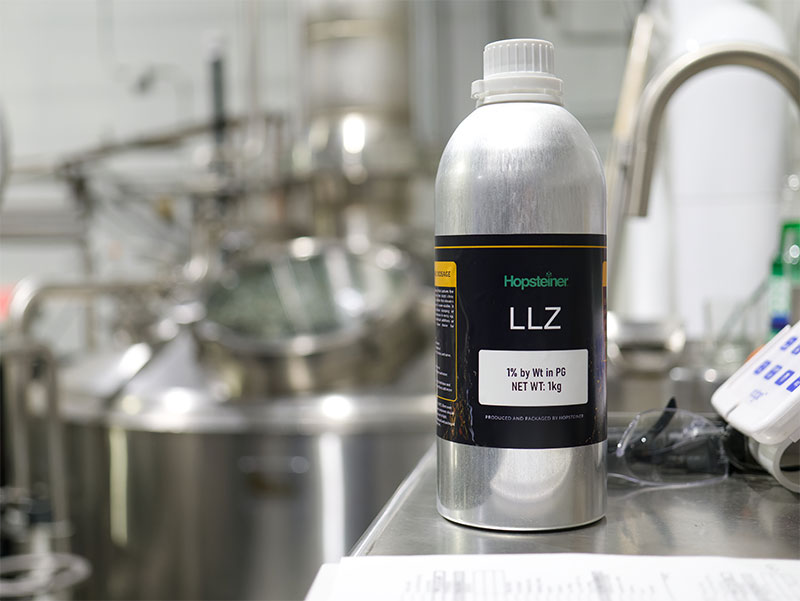
Products like LLZ™ provide bright lemon and lime characteristics that can transform carbonated water into a refreshing, hop-forward beverage with minimal additional ingredients. Because the product is derived entirely from hops and contains no added emulsifiers or unnecessary synthetics, producers can maintain clean labelling while achieving repeatable flavour.
Similarly, SalvoPlus™ offers breweries another tool by delivering expressive hop aroma without introducing bitterness or plant material. Unlike traditional dry hopping, brewers can dose with accuracy, minimize product loss and avoid sacrificing yield.
Perhaps the greatest advantage is speed
Developing a new beer often requires weeks of production planning and tank occupancy. Developing a hop water can be accomplished in hours. Brewers can prototype multiple formulations in a single afternoon, adjusting aroma intensity or citrus character with precise additions rather than waiting through an entire fermentation cycle.
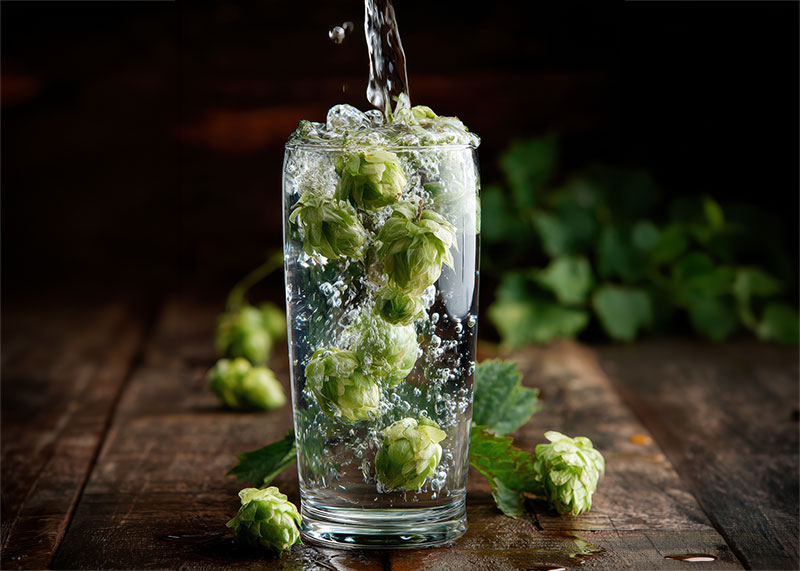
The economics are equally compelling. Every brewery has experienced the challenge of balancing innovation with production capacity. Hop water creates an additional revenue stream without competing for fermentation space, allowing breweries to diversify portfolios while maximizing existing infrastructure. The opportunity extends beyond hop water itself. Sparkling beverages, functional drinks, ready-to-drink cocktails and alcohol-free IPAs are all benefiting from advanced hop ingredients that deliver authentic hop character with greater control than traditional methods.
Consumer behaviour suggests moderation is becoming a permanent segment rather than a passing trend. Breweries that embrace the category today may discover they’re not simply adding another stock keeping unit – they’re creating an entirely new business line.
The future of brewing may still revolve around beer, but increasingly, it also revolves around what hops can become when brewers aren’t constrained by fermentation.