The thought of spending weeks or months in a classroom might sound a little scary to some adults, but what if it helped you land a dream job brewing everyone’s favourite craft beer or producing a pinot noir to die for?
Poured Canada spoke with five Canadian colleges and universities about the different educational opportunities they offer for those interested in a career in the beverage-alcohol industry. Here’s what they had to say.
Brock University
The Cool Climate Oenology and Viticulture Institute was established at Ontario’s Brock University in 1996. The institute was formed in conjunction with the southern Ontario wine industry. Its three main mandates are to conduct research, provide outreach services to the local wine industry, and offer professional and continuing educational opportunities.
As part of its educational program, the institute offers more than 20 professional and continuing studies courses for people who want to enter the industry or upgrade their skills. These short-term courses, accredited through the province with micro-credential certification, range from foundations in winemaking, introduction to grape growing and using effective social media in marketing wines.
Additionally, Brock offers Canada’s only four-year university degree program in Applied Grape and Wine Science through its Department of Biological Sciences that focuses on winemaking, viticulture and marketing, including subjects such as wine chemistry and plant physiology.
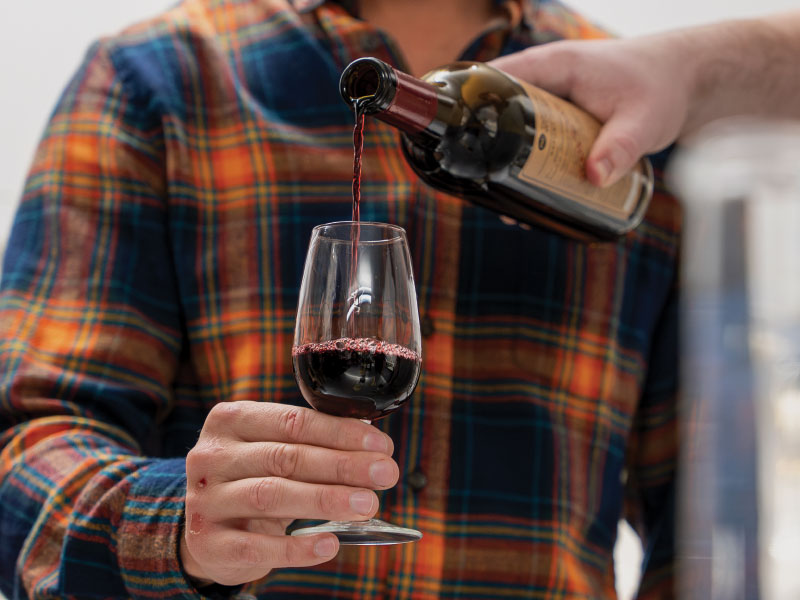
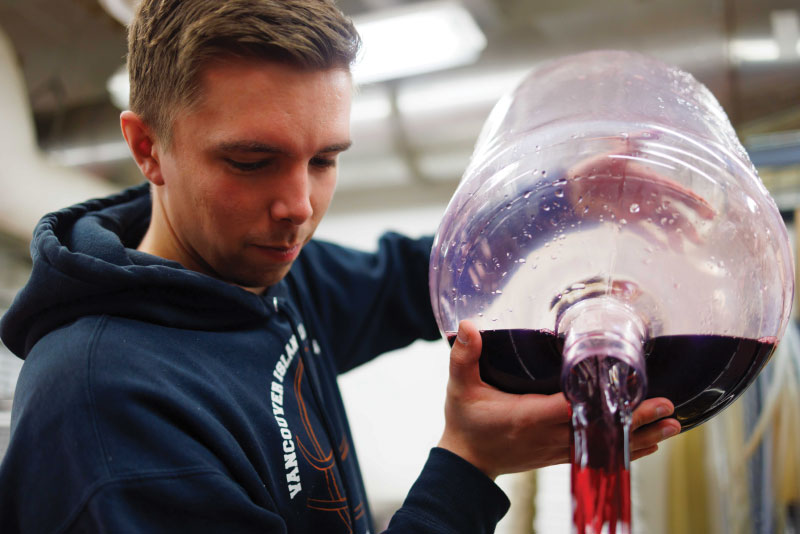
For students with prior scientific training with a bachelor of science in a related field, a one-year certificate in grape and wine technology is also an option, where students take grape and wine-specific courses to be industry-ready. Both program options serve upwards of three dozen students in any given school year with a 96 per cent placement rate of graduates into the industry upon graduation.
Jennifer Kelly, the institute’s senior scientist of oenology, says part of what makes the school’s four-year degree program unique is the fact it’s been designed to be very hands-on. After gaining background education in relevant scientific disciplines such as chemistry and environmental biology in Years 1 and 2, students are given their own grapes as part of a wine processing course in which they will take those grapes from vine to wine. That includes everything from planning how they want to make their wine at the institute’s pilot winery to designing a label and bottling the finished product.
The institute also offers a co-op education stream as part of its four-year degree program, where students are provided three four-month work terms at wineries in the region and other parts of the country. “Students at the fourth-year thesis level get to engage in applied research projects, often partnered with industry members. The experience of solving real-world problems gives them an opportunity to work with different growers or winemakers. That sets them up for great success going forward with their careers,” Kelly said.
The institute’s first graduating class was in 2000. While many of those students have gone on to succeed in southern Ontario, British Columbia and other parts of Canada, a large number are now employed in other parts of the world, including Australia, New Zealand and across the U.S. The best part, Kelly says, is that it’s a tight-knit group and they often share industry opportunities with fellow alumni.
Kwantlen Polytechnic University
Kwantlen Polytechnic University’s (KPU) Brewing Program was launched in 2014. Hundreds of its graduates have gone on to work in the craft brewing industry in southern B.C., where the school is based, as well as in other parts of the country and around the world. The program accommodates up to 35 students per school year. The majority come from B.C., but the program also attracts learners from other parts of the country and even as far away as Switzerland, South America and Asia. They range in age from 19 to 60 years-plus.
Students receive a diploma in brewing and brewery operations as part of a two-year, full-time program or a three- or four-year, part-time program. The school also offers a one-year certificate program in brewing as well as micro-credential courses on subjects such as brewing science, beer sensory evaluation and the business of brewing, which are popular with people working in the industry seeking to upgrade their existing skills. The three foundational pillars of the program are: to provide students with the hands-on skills needed to work in a brewery, to teach them the science behind brewing, and to furnish them with the foundational information needed to operate or own a brewery.
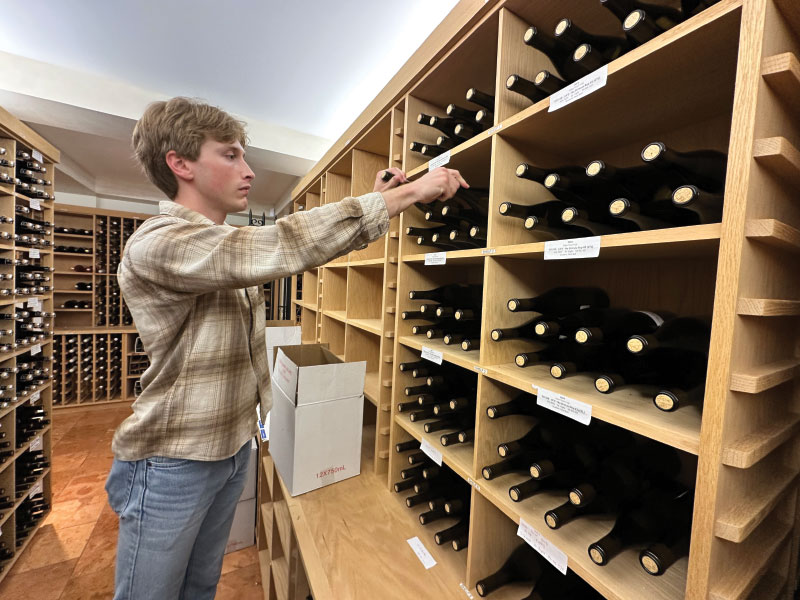
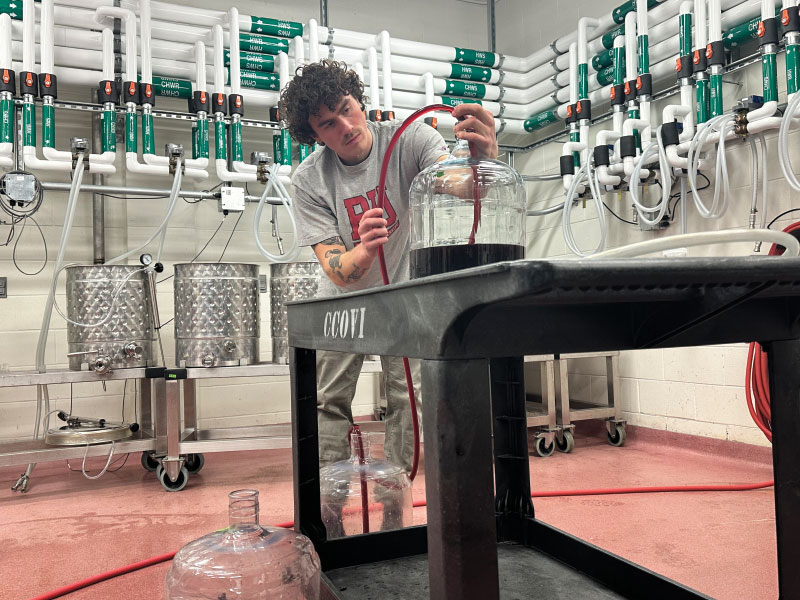
Alek Egi, program chair and brewing instructor at KPU, says one of the things that makes the school’s brewing program unique is the emphasis it places on the science of brewing. The school has rigorous science-based requirements for student applicants. Meanwhile, instructors Egi and Dominic Bernard have master’s degrees in food science and brewing, respectively, while colleague Martina Solano Bielen holds a master’s in microbiology.
Another factor that sets the KPU brewing program apart is its standalone, registered manufacturing brewery located right on campus that was designed for teaching. It features a state-of-the-art, four-vessel pilot system that was donated by a local brewing equipment manufacturer, giving students the opportunity to work directly with professional-grade tools. It’s also home to a tap station, where the finished products from the program’s practical brewing courses are sold by students to customers every Friday afternoon, providing real-world experience in both production and customer-service aspects of the industry.
Kwantlen’s program has received numerous accolades from the brewing industry, including multiple B.C. Beer Awards and being named Brewery of the Year in 2019. It also won the U.S. Open college beer competition that same year.
Acadia University
Acadia University in Wolfville, N.S., launched its Applied Bioscience program in fall 2024. A total of 12 students are currently enrolled in the program, and school officials expect that number to double in 2026. Students receive a bachelor of science upon graduation from the four-year degree program. Matthew Lukeman, an assistant dean and a professor of chemistry, says the program is a mix of biology and chemistry that aims to provide students with real-world work experience and research opportunities in the beverage industry as well as the biopharma sector.
“The program was actually created in response to economic demands within our province in two sectors,” he said. “One was beverage, not just wine, but also beer, craft drinks and all sorts of alcoholic and non-alcoholic beverages. People from industry had been coming to us over the years, saying they would love it if we could have a program that would help people develop the skills that would aid in fuelling the growth of that industry.”

If you think of the top wineries in the province … like Stratus, Tawse, Inniskillin, these are all run by graduates of ours.
Craig Youdale, Niagara College
The program’s Science and Business of Beverage stream emphasizes beverage production, marketing and analysis. There is a heavy focus on biochemistry and organic chemistry, including cell and molecular biology. An embedded business minor provides students with an appreciation for the business realities that go along with the science side of things and includes a minimum of six courses in various business disciplines, such as marketing and accounting.
Part of what makes Acadia’s program unique is its built-in co-op placement component, Lukeman says. Students receive up to 12 months of co-op placements at local vineyards and craft breweries, where they work alongside experienced industry professionals to gain practical experience. They get to work side-by-side with researchers at the university on a variety of projects, including a study of grape varieties and chemical analysis of different wine products. The program also offers a course on sensory analysis, which is taught through the university’s Nutrition and Dietetics department. As part of the course, students learn how the different components of a wine can influence an individual’s sensory experience.
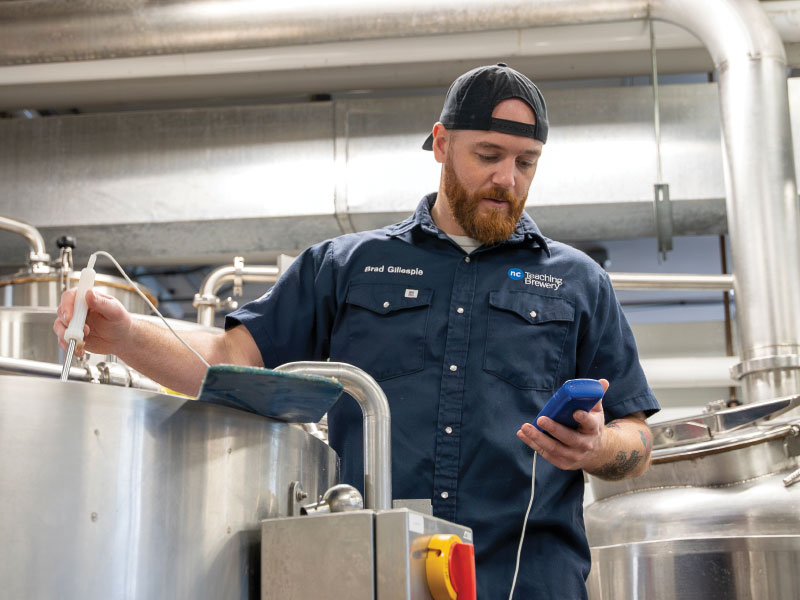
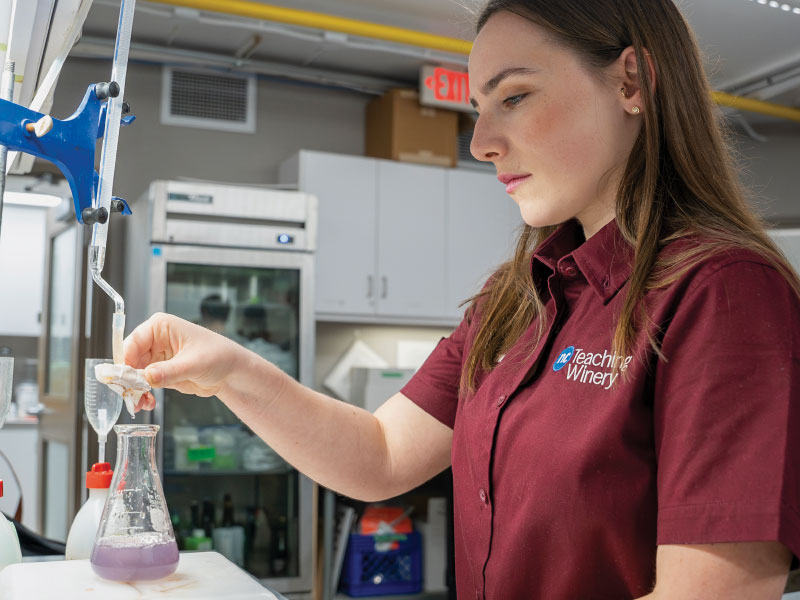
In addition to the Applied Bioscience program, the university is home to the Acadia Laboratory for Agri-Food and Beverage (ALAB), which is an ISO-accredited, fee-for-service lab that provides chemical testing of beverage products. Each school year, the lab employs three co-op students who receive an opportunity to work with the lab’s three technicians using an array of state-of-the-art instruments.
“What’s unique about it is that in bigger labs, the students often only ever work on one instrument. But in our lab, because it’s so small, most students have the opportunity to work with and be trained on ALAB’s instruments,” said Katrin Sommerfeld, Acadia’s manager of industry and community partnerships.
Niagara College
Niagara College’s School of Wine, Beer and Spirits is located on the institution’s Daniel J. Patterson Campus in Niagara-on-the-Lake, Ont. About 100 students take part in the program’s three disciplines each academic year. It has the distinction of being one of the first academic institutions in Canada to offer training specifically for the beverage-alcohol industry.
The school’s three core programs are its two-year Winery and Viticulture Technician program, the two-year Brewmaster and Brewery Operations Management program and the one-year Graduate Certificate in Artisan Distilling program. It also offers a one-year Beverage Business Management certificate program that provides an education on all aspects of the global alcoholic beverage industry, including business, retail, export, marketing and navigating a highly regulated environment.
Each of the three core programs has its own commercial production facility located on the university’s 125-acre campus. That includes:
- The Niagara College Teaching Winery, which was established in 2000 and offers students a chance to learn from industry. professionals and create up to 5,000 bottles of wine annually.
- The Niagara Teaching Brewery, a 1,500-square-foot micro-brewery facility.
- The Niagara Teaching Distillery, a 2,500-square-foot facility that features five stills, four mash tins and 10 fermenters used for on-site production of a variety of distilled spirits that produces 500 bottles of spirits each year.
The school is also home to a 40-acre, on-campus vineyard. In addition, it grows its own botanicals, hops and tender fruit for use in its distilling and brewing programs. Craig Youdale, the college’s dean of culinary, tourism and beverage, says what makes the School of Wine, Beer and Spirits unique is the fact that it provides students an opportunity to be involved in every aspect of production, from growing the grapes used in wine production and hops used in brewing to bottling the finished products and creating marketing campaigns for them.
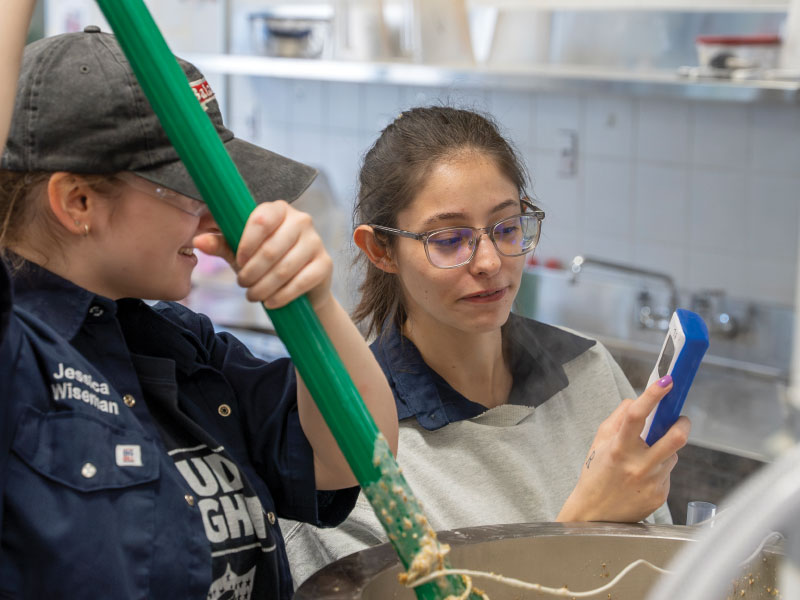
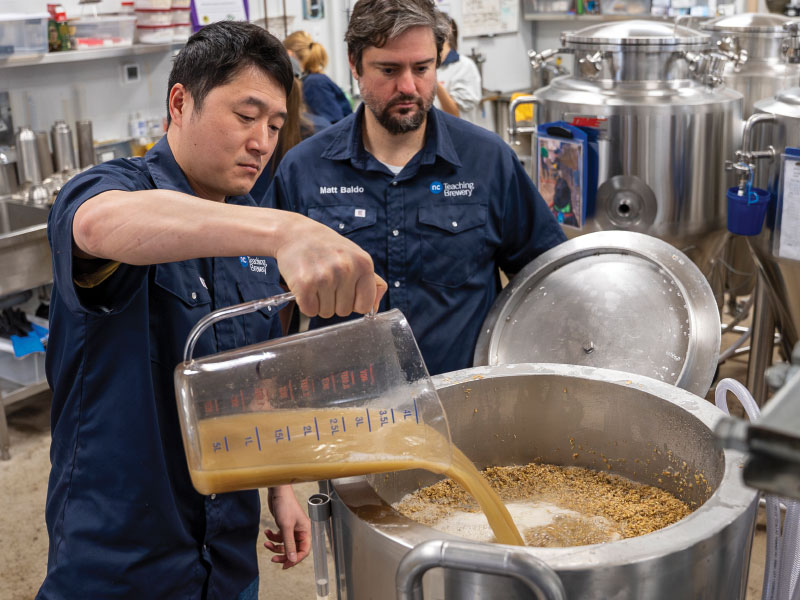
“They are all really unique programs,” he said. “There aren’t any others in the country … like them that have the level of hands-on education. When I say hands-on, it’s the real deal. We’re even showing people how to drive a tractor.”
The school has also developed close relationships with several wineries, breweries and distilleries in the region and other parts of the country. That includes Labatt Brewing and Molson Coors on the beer side, and several of the most respected wineries in the region. As a result, students in the program are regularly placed at those facilities where they receive valuable, first-hand experience that can help propel their careers down the road.
“It’s actually pretty tough to find a winery in Niagara that doesn’t have one of our grads,” Youdale said. “If you think of the top wineries in the province … like Stratus, Tawse, Inniskillin, these are all run by graduates of ours. We have tons of graduates that have started their own brewery and they’re owner-operators. We also have a lot of head brewers in different operations across the system.”
Youdale says one of the school’s future priorities will be providing more people access to its programs. That could include opening it up to more people from other parts of the country as well as offering some form of online programming. Beverage Business Management is expected to become an online offering in 2026. Several courses within the School of Wine, Beer and Spirits are also open to part-time students – including Wines of Europe, Wines of the Americas and Southern Hemisphere, and History of Brewing and Beer for the Winter 2026 term.
Durham College
Durham College’s Whitby campus in southern Ontario is home to the Centre for Craft Beverage Innovation (CCBI), which collaborates with both established and novice craft beer, hard cider, kombucha and seltzer makers on everything from formulating new recipes to testing new ingredients and production methods. The centre’s mandate is to share its technical knowledge with beverage makers and provide entrepreneurial expertise to help industry partners turn technical innovation into business success.
Even though the CCBI is located on a college campus, it’s not a brewing school per se. Most of the people who work at the centre are paid staff. However, a small number of Durham students do take part in research projects at the centre each year. Those students receive instructions on lab protocols and how to conduct proper testing. The idea is to provide them with hands-on experience so they can learn to interpret test results.
With hands-on training, strong industry partnerships and impressive graduate placement rates, one thing is clear: the path to a career in beverage alcohol increasingly begins in the classroom.