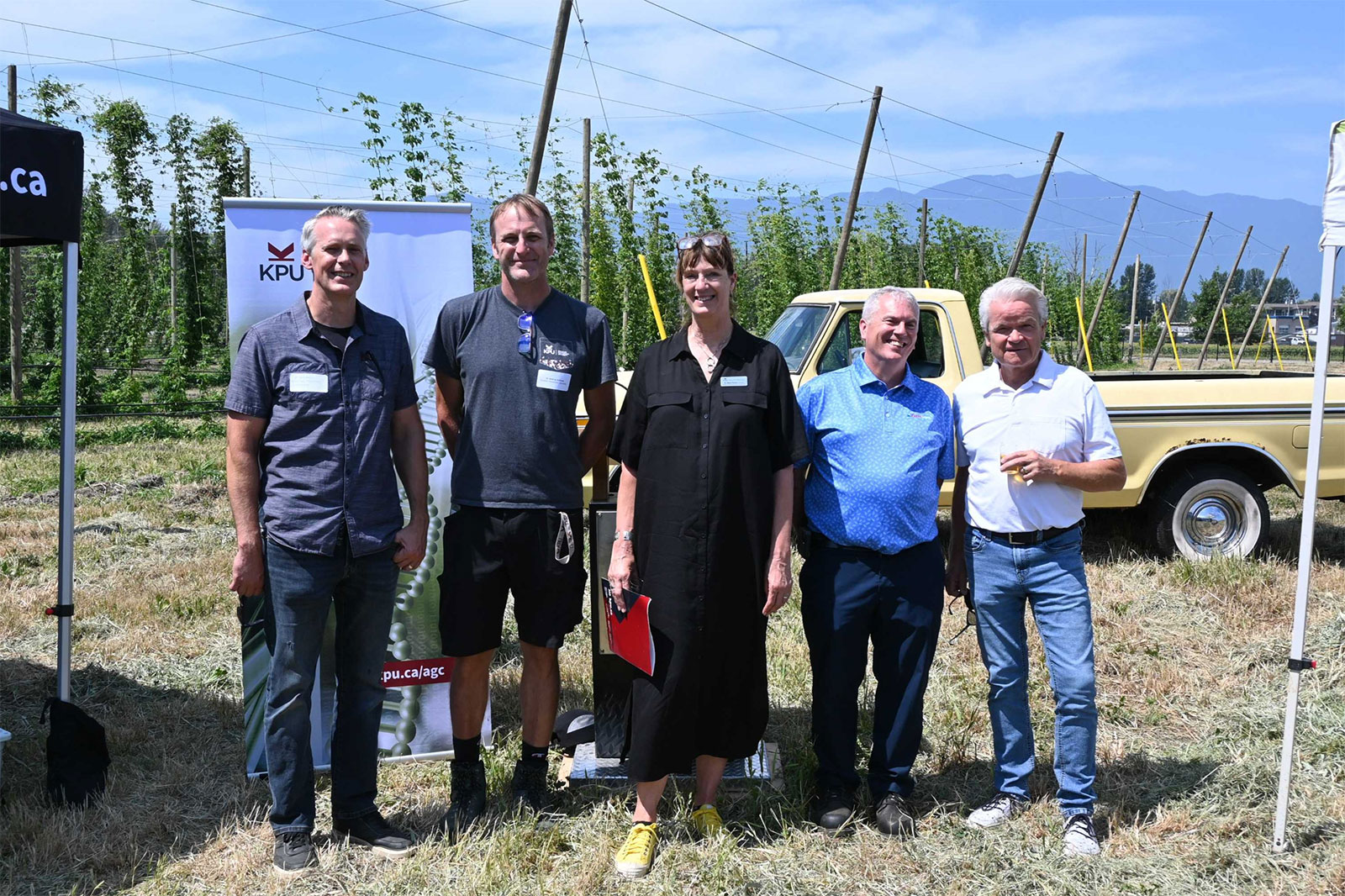
Kwantlen Polytechnic University (KPU), in partnership with Molson Coors, unveiled a new research and development hop yard in Chilliwack.
Located adjacent to Molson Coors’ Fraser Valley Brewery, the site will facilitate field trials of hop varieties developed through the B.C. hop variety development program, led by KPU’s Applied Genomics Centre (AGC) since 2019 in partnership with the BC Hop Growers Association and its members. It will also serve as a living library of genetically diverse hop plants and a dedicated space to advance applied research, supporting B.C.’s hop growers while providing students with hands-on learning opportunities.
“We’re excited to work with Molson Coors in supporting local farmers through this multi-year project,” said Paul Adams, PhD, director of KPU’s Applied Genomics Centre. “Partnerships like this really illustrate how cutting-edge research and innovation can address industry challenges and meet the needs of our local communities.”
Over the past year, researchers and students have been establishing the hop yard from the ground up, from prepping the field to planting the first experimental varieties developed at the AGC. Beyond testing new hop varieties, the field will also serve as a space to research best irrigation practices and more.
“Hops are a critical ingredient in brewing, and the Fraser Valley remains one of the country’s most important hop-growing regions,” said Graham Kendall, general manager, Molson Coors Fraser Valley Brewery. “We’re excited to partner with KPU on this initiative to support applied research and innovation while strengthening connections with local growers and providing students with hands-on experience that will help shape the future of agriculture and brewing in B.C. and beyond.”
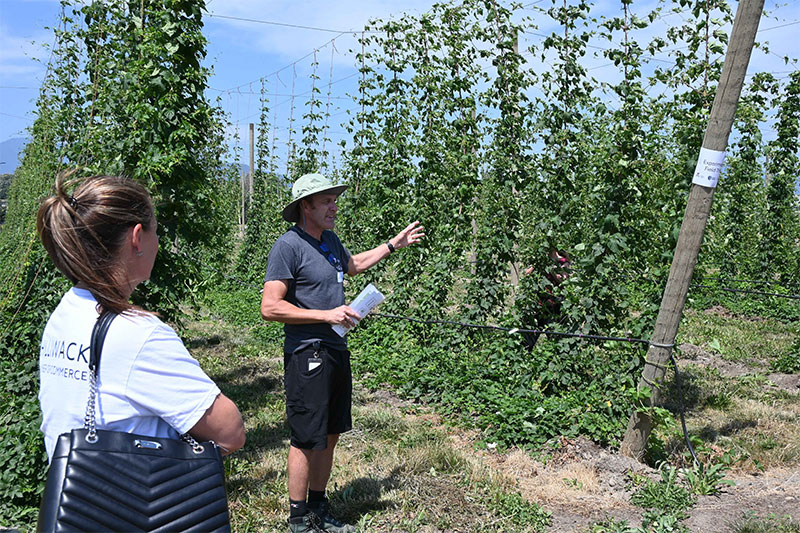
“This project gives us a dedicated research field where we can grow things outside of the commercial scope and explore challenges that growers are facing in order make better-informed breeding decisions,” said AGC researcher Mathias Schuetz, PhD, who is leading the project.
Hops, which are the female flowers of the plant species Humulus lupulus, are used to provide flavour and aromas to beer while also functioning as a natural preservative. The Fraser Valley has a longstanding history of hop production, once having ranked as the largest hop-growing region in the Commonwealth in the 1940s. Using state-of-the-art DNA analysis and chemical techniques, KPU researchers are helping local hop production thrive again by creating new, climate-resilient varieties.
“We’re crossing different plants to create varieties with desirable traits, which we are then planting and evaluating in the field,” said Schuetz. “The idea is to create something that is resilient against heat and drought, while also being profitable and desirable for brewing.”
Hops research fueling hands-on opportunities for students
The hop yard also serves as a living classroom, with KPU students from multiple disciplines – including horticulture, biology and brewing – gaining hands-on experience each step of the way.
“I do a mixture of lab work and field work, which includes prepping the field, managing the irrigation system and collecting data on new varieties we’re trying out,” said Spencer LePage, an AGC student research assistant and third-year horticulture student at KPU. “I’ve had a really great experience so far, and feel like this work really helps bridge that gap between just learning about concepts in classes and actually doing them in real life.”
At the same time, KPU Brewing and Brewery Operations students are helping test how new varieties perform by transforming experimental hops into small-batch beers, one of which was served at the unveiling.
Supported by Genome BC and the Natural Sciences and Engineering Research Council of Canada, the AGC is Canada’s first and only Technology Access Centre focused on applied genomics, and is nationally unique in its focus on serving the agriculture sector through direct, hands-on research support.